Humanoid robot in substation: E.ON trains the 4NE1 but keeps silent on unit numbers and success metrics
E.ON, enviaM and Neura Robotics want to train the humanoid robot 4NE1 for inspections in the power grid, with initial deployments planned for 2027. The partners are not disclosing how many robots will be used, which facilities they will be deployed in, or what will constitute success. Initial training is taking place in a hall at Munich Airport.
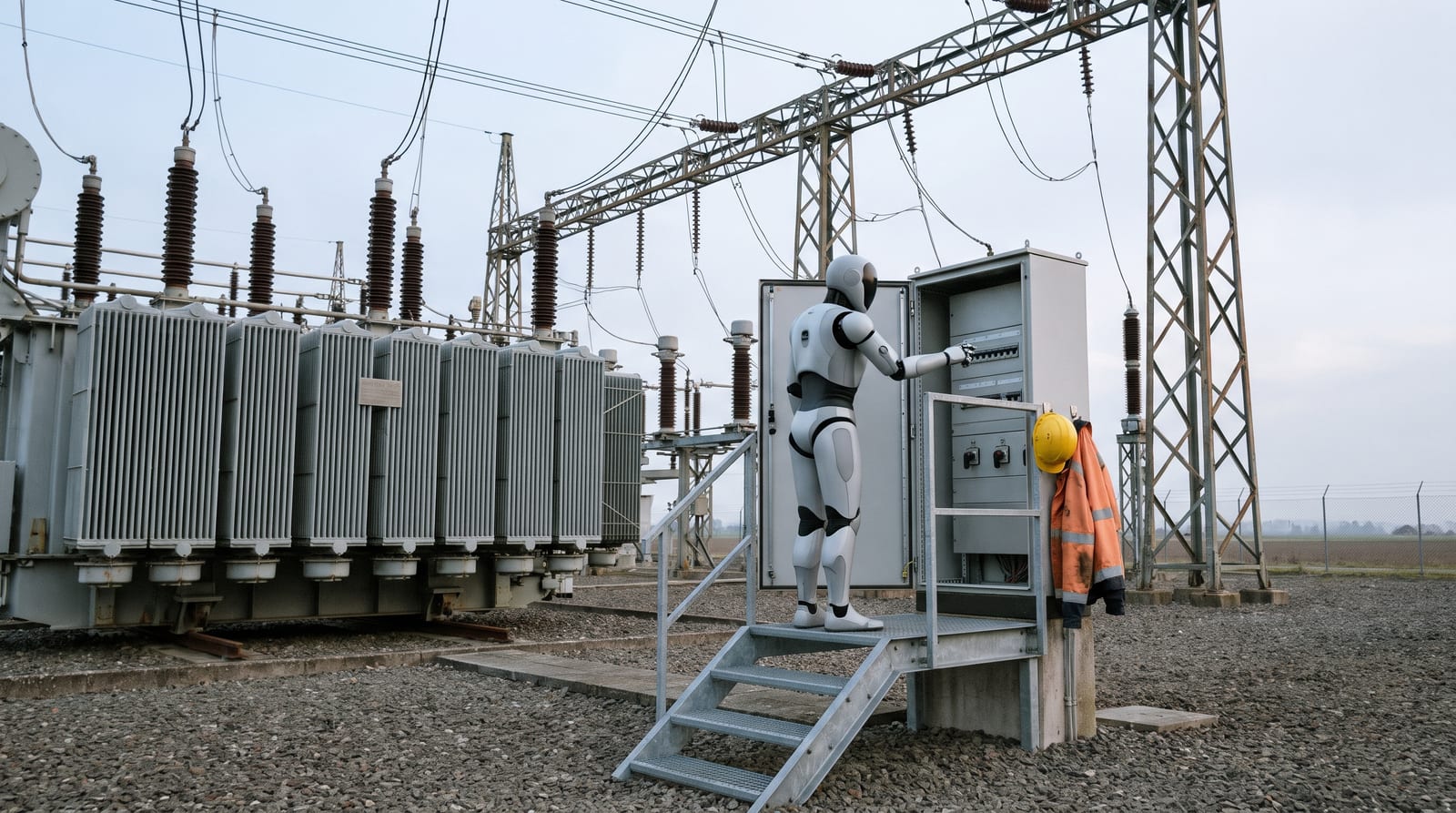 AI gen.
Energy company E.ON, East German utility provider enviaM and Neura Robotics from Metzingen want to train humanoid robots for inspections in the power grid, as the three companies announced on November 5. The plan is to use the 4NE1 model, which is to monitor substations and inspect facilities, and the partners expect their first real-world grid operations experience in the course of 2027.
Their strongest argument is that the humanoid can navigate stairs, pass through doors and reach control cabinets without requiring any modifications to the facilities. However, almost everything else remains open—the criteria by which such a trial could be measured: how many robots will be deployed, which substations they will go to, and what constitutes success are not stated in the announcement, according to the tech portal Tech Times.
Initial training takes place far away from any high voltage, namely in the TUM RoboGym, a training center of the Technical University of Munich and Neura at the LabCampus of Munich Airport, which only opened on October 22. There, grid operator technicians will demonstrate their work processes and provide their requirements so that the robots can learn the procedures under controlled conditions before entering a real facility. They will learn using the in-house AI model Neuron AI, which according to the manufacturer processes not only images but also sounds, tactile sensations and forces.
The step into the grid is being handled by Mitnetz Strom, the grid subsidiary of enviaM, while mixed teams from all three companies determine which tasks will be tested at all. The focus is on inspections, monitoring of substations and security patrols of facilities, and the partners also want to test physically demanding, repetitive or hazardous work as additional applications. Whether and when a robot will work in active grid operations depends on the results of this testing, according to heise online.
The project is justified by the shortage of skilled personnel, and enviaM CEO Stephan Lowis promises employees targeted relief, according to the news agency dpa. Neura founder David Reger emphasizes that it is about combining technological progress with the workforce's practical experience. Noteworthy is a clause that appears rather incidentally in the announcements: E.ON and enviaM are to retain control of their data and trained capabilities at all times. What the robot learns in the substation belongs to the grid operator and not the manufacturer.
For the inspection rounds alone, there would be no need for a humanoid, since four-legged robots have been handling inspections in industrial facilities for years, and Zurich-based ANYbotics alone has delivered over two hundred of them. The reference to doors and control cabinets reveals what the partners are actually betting on: hands that can press a door handle or open a cabinet. Precisely for this part, there is as yet no information on how reliably the 4NE1 performs such tasks.
The project is also being followed in Switzerland, particularly since Neura has been developing the 4NE1 in Zurich since last December, and the industry portal netzbetreiberinfo.ch has taken up the announcement for the country's grid operators. The robot in question is itself still new, as Neura only presented its latest generation on the same day the school in Munich opened.
This article was created with the support of artificial intelligence and editorially reviewed. The article image is an AI-generated symbolic image, not a press photo.