Humanoid robots at Xiaomi: eight-hour shift, and no success rate for the first time
Two humanoid robots from Xiaomi completed a full eight-hour shift at an automotive plant on November 3rd. In March and July, the company had documented such trials with success rates of 90.2 and then 98 percent. This time, it provides not a single performance figure, and thus a measurement becomes a runtime.
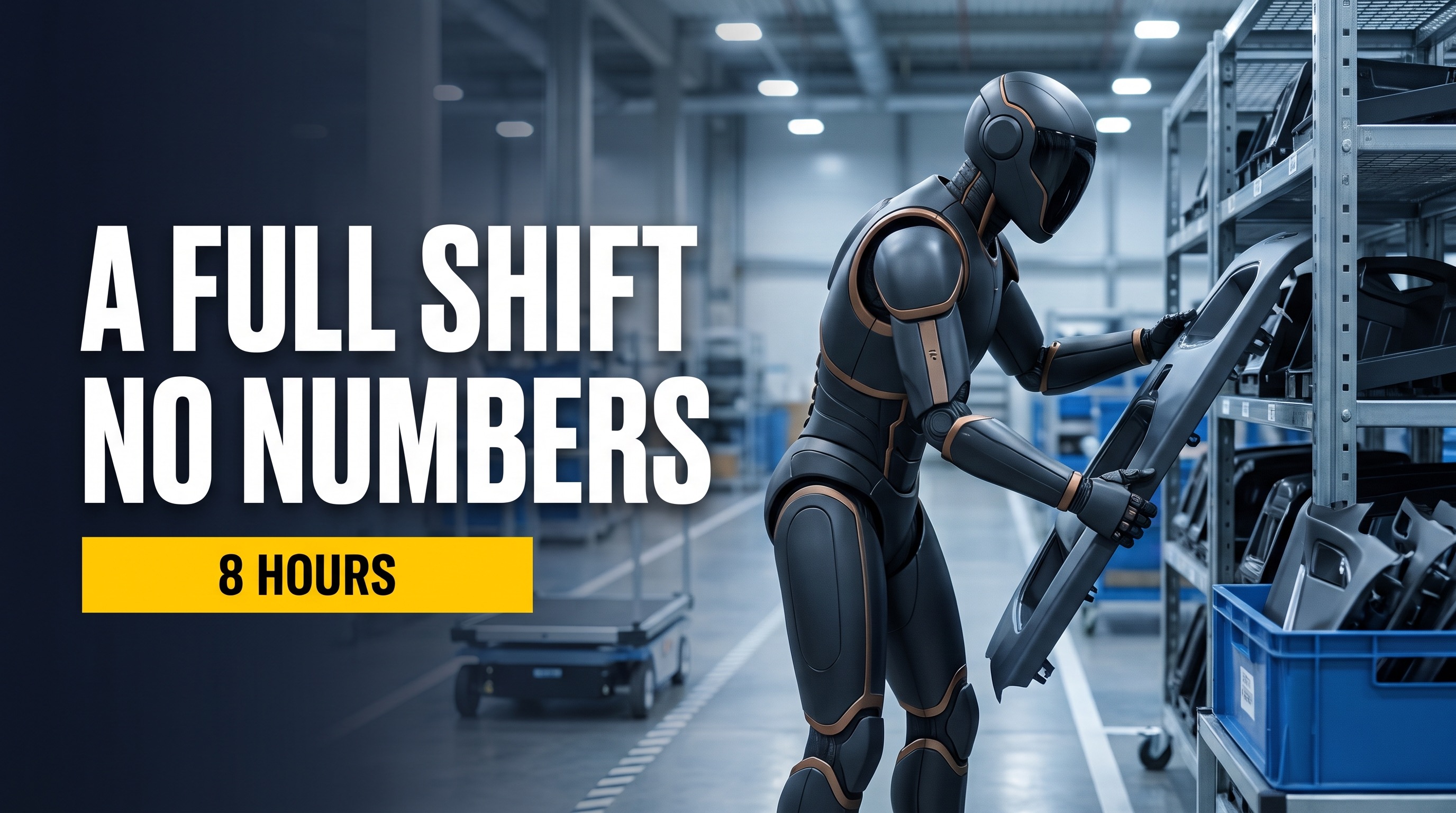 AI gen.
On November 3rd, Xiaomi released a video showing two humanoid robots completing a full eight-hour shift at its own automotive plant, at a single workstation: they remove side covers for center consoles from containers and place them individually into compartments in a shelf. The company states that the two robots thereby covered the entire daily demand for this station and independently corrected any deviations.
In March and July, Xiaomi had documented such trials with success rates of 90.2 percent over three hours, later 98 percent. This time, not a single performance figure appears in the announcement—neither piece count nor success rate nor the number of interventions—and thus a measurement becomes a runtime.
This is no mere formal distinction, because a success rate indicates how well the robot works, while a runtime only shows how long it stood at the station at all. In March, the requirement was strict: a cycle time of 76 seconds that the robot had to maintain, otherwise the station would stop. Whether it still maintains this after eight hours cannot be determined from the video, because the displayed clock runs at a hundredfold speed, and no one sees a shift, only roughly five minutes of film.
The power question also remains unresolved. A humanoid with movable arms lasts two to five hours depending on the model before the battery runs out, and whether the robot was swapped out, charged, or worked tethered in between, Xiaomi does not say. In a brief section about cooperation between multiple machines, no two-legged robot appears at all, but rather a torso mounted on a mobile platform.
Nevertheless, the run represents progress, because so far no manufacturer has demonstrated a full shift at an actual workstation. Lei Jun announced last December that Xiaomi would deploy humanoid robots in large numbers in its own plants within five years. But Xiaomi is thus working at the same point as Tesla, whose early Optimus appearances were partly remote-controlled without this being stated in the video: the bigger the demonstration, the softer the evidence.
For Swiss plants, the eight-hour mark is not inherently the interesting figure. Here operations run in two or three shifts; a machine pays for itself per hour of use. Because one hour of production work in Switzerland costs several times what it does in China's automotive plants, a reliable humanoid would become profitable sooner than in Beijing. What is decisive then is how many of those eight hours run without a technician. Xiaomi provided this exact figure twice and omitted it the third time.
This article was created with the support of artificial intelligence and editorially reviewed. The article image is an AI-generated symbolic image, not a press photo.