Humanoid Robot for $2,490: Faraday Future's Price Breaker is just under 50 Centimeters Tall
Faraday Future is selling the FF Nova for $2,490 as the cheapest humanoid in the US. However, the robot is only 49.7 centimeters tall and moves at ten centimeters per second. For now, it's only available by invitation, in quantities of one hundred units.
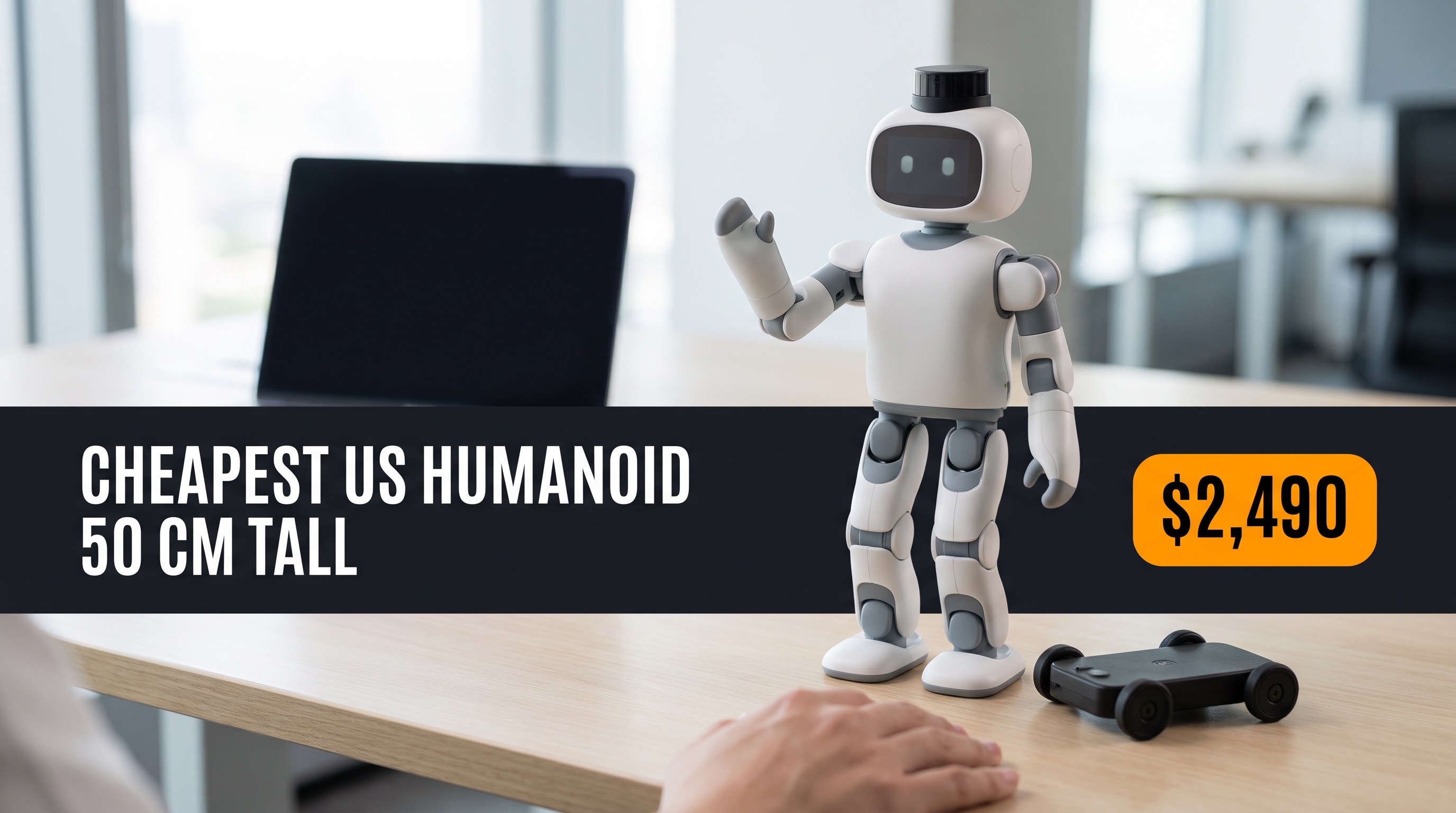 Symbolic image · AI-generated
On October 15, Faraday Future and publicly listed FF EAI Robotics unveiled a bipedal robot for $2,490 and declared it the cheapest humanoid in the US. The FF Nova is 49.7 centimeters tall and moves at ten centimeters per second. For now, almost no one can buy it anyway, as the first phase includes one hundred devices by invitation only.
The record is created primarily through the category. A Unitree R1 costs around $4,900 and measures 1.2 meters, and in its own comparison table, Faraday Future positions the Nova between a toy and a full-grown humanoid. The math works out as long as size isn't factored in, and that's exactly why it's worth taking a closer look at the device.
For its class, the sensor suite is unusually complete. On top of the head sits a two-dimensional Lidar, along with a wide-angle camera with approximately four megapixels, a depth sensor, and a ring of three microphones that detects the direction from which someone is speaking. The face is a two-inch display with illuminated ear sections, and because the robot recognizes voices, it can be used as a body for a cloud agent.
The 2.8-kilogram lightweight robot can move in two ways: on foot or on a removable rolling base that makes it eight times faster. It can handle obstacles up to two centimeters high, which in an apartment already stops at the first door threshold. The twenty degrees of freedom are distributed across the head, arms, and legs; the manufacturer doesn't mention hands or grippers in any specifications.
What the $2,490 doesn't include is spelled out further down in the announcement: The developer package with capabilities costs an additional $390, and to be allowed to order at all, you must apply within a seven-day window on developer.ff.com and wait for approval. The pipeline from simulation to the actual machine, with which developers should adjust reward functions and test trained strategies on hardware, runs on Nvidia's Isaac platform. It's been announced but not yet delivered, as the announcement states that the robot will connect to it, and the capability marketplace also appears there in the future tense.
The second device from the same evening reveals the business model more clearly. The FF Nova Mini is 34.9 centimeters tall, weighs less than one kilogram, runs on two legs, stands up on its own, and does a forward roll. It costs $299 and is available immediately; it's programmed using blocks or by demonstration. It's sold together with a course for $499, sixteen lessons in small groups over eight weeks, designed for children ages eight and up and for classrooms. The instruction thus costs more than the robot.
Behind this offering stands a structure that requires reading twice. On October 12, the two companies signed contracts through which FF EAI Robotics paid for Faraday Future's robotics business entirely in stock, valued at approximately $200 million, while the buyer itself is valued at about $60 million. This buyer was called AIxCrypto Holdings until the end of September, and the same documents contain references to substantial doubts about the ability to continue operations.
Faraday Future is not an unknown name, but rather a cautionary tale. The company was founded in 2014, delivered its electric car FF 91 in homeopathic quantities after years of delays, and reported record revenue of $1.35 million for the first half of 2026, now driven mainly by robotics. Anyone selling hardware at this price needs volume, and that doesn't come from California. In its risk disclosures, the company acknowledges that it depends on Chinese contract manufacturers for practically all robotics products and that an American import ban on Chinese robotics could affect the business.
For a Swiss interested party, this initially means watching and waiting, as applications require a delivery address in the US and there is no distribution channel to Europe. But the detour isn't necessary. Swiss provider HIT Robotics offers the Noetix Bumi starting at CHF 3,892, 98 centimeters tall with 21 axes, delivered and commissioned. So if you want to put a humanoid in the classroom here, you pay more than in California and get a robot that's twice as tall, plus someone who sets it up and comes by if something breaks.
It's at this exact point that the value of the American price is decided. At Faraday Future, the course comes with the device, the lessons build a portfolio, and ultimately a marketplace is supposed to emerge where developers can sell their capabilities. The profit doesn't come from the machine but from everything that follows, and that's exactly the part stated in the announcement in the conditional: potentially, in the future.
This article was created with the support of artificial intelligence and editorially reviewed. The article image is an AI-generated symbolic image, not a press photo.