Humanoid robots from Japan: Panasonic to start manufacturing in 2029, Kawasaki in 2030
Panasonic will begin manufacturing humanoid robots in 2029, Kawasaki will deploy its Kaleido around 2030. Both timelines lag behind industry plans. Panasonic's advantage is not dexterity or intelligence, but batteries that have never caught fire.
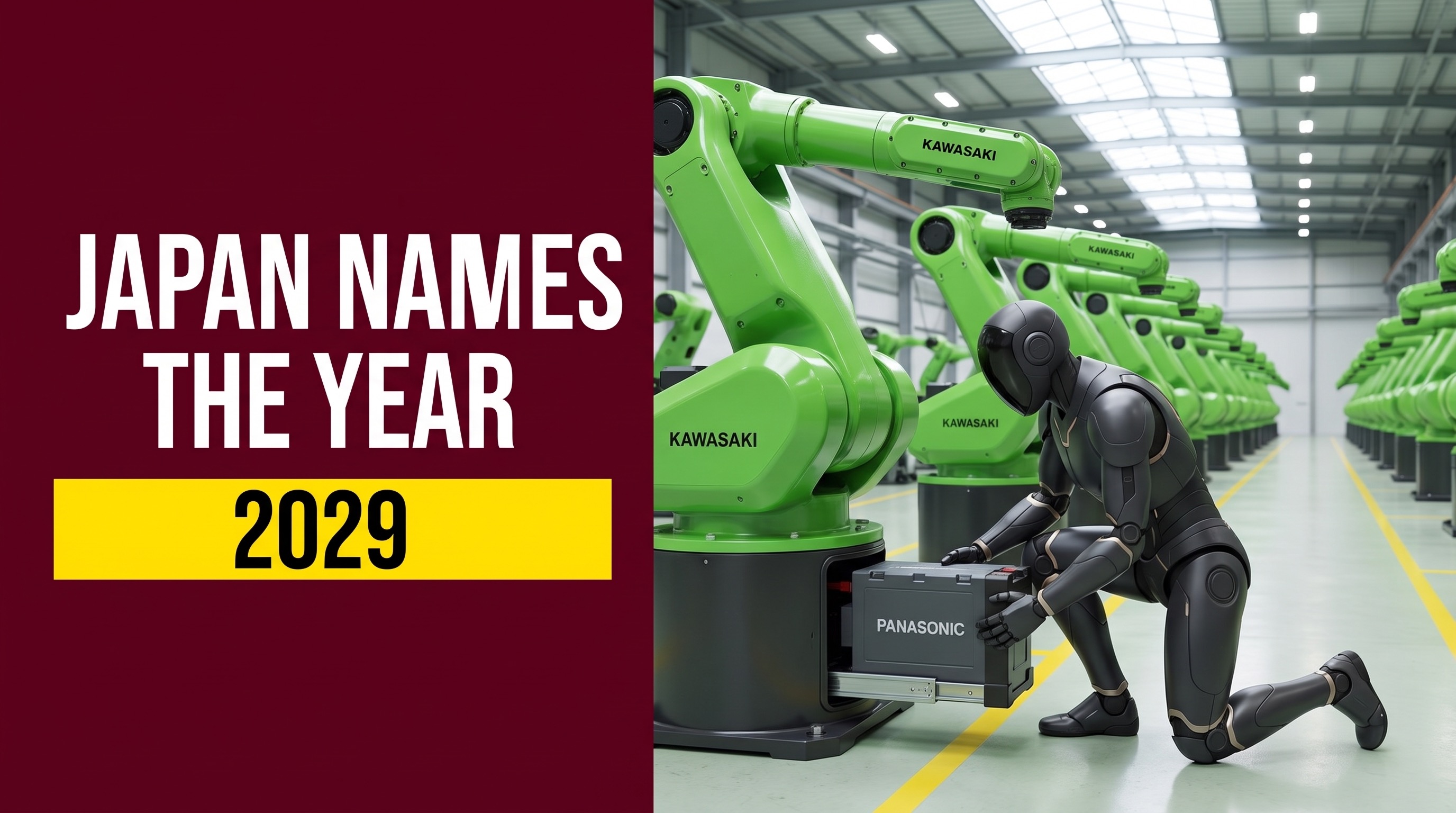 Symbolic image · AI-generated
Panasonic will begin manufacturing humanoid robots in 2029. This was announced by Chief AI Officer Akira Sakakibara on October 5 to Nikkei Asia, and he immediately acknowledged that there is nothing to show yet. On the same day, it became known that Kawasaki will deploy its humanoid Kaleido around 2030, initially remotely controlled with AI support, for patrols and parts transport. Assembly will come later, true autonomy in unstructured environments not until around 2040.
With this, Japan's industry is naming years for the first time, and they fall far short of what the industry plans. What is striking is how Panasonic wants to differentiate itself: not with dexterity, not with intelligence, but with the fact that the batteries of its subsidiary Panasonic Energy have never been involved in a serious fire.
Kaleido is not a new project. Kawasaki Heavy Industries has been developing the biped since 2015, the current version Kaleido 9 lifts 18 kilograms. What's new is the base platform. The robot is to be the first customer to run on the platform from Noetra, the Japanese consortium for physical AI. Noetra was founded in July, has 44 members including Sony, SoftBank, NEC and Honda, and receives 387.3 billion yen from the Ministry of Economy in the first year, roughly 2.3 billion dollars. Up to one trillion yen is being discussed through fiscal year 2030.
The development roadmaps explain why Kawasaki says 2030 and not 2027. An omnimodal model that processes text, image, video and audio together is planned for fiscal year 2028, an AI that truly understands space and physical properties not until 2030. The data center for this is called FRONTia, 140 megawatts, 27,500 Nvidia Rubin GPUs, construction starts April 2027, operations begin June 2028. Anyone who connects their robot to this foundation cannot finish sooner than the foundation itself.
Panasonic is at a different point. The research department for AI and robotics has only existed since October 1, nobody has seen a robot, and Sakakibara himself says work on the models has only just begun. What the group can demonstrate are components: power electronics, thermal conductive materials, tactile pressure sensors, compact motors. In September, Panasonic Energy opened a new battery research center and explicitly mentioned humanoids there as a coming application field. Factories and warehouses are the first target markets.
That fire safety is moving to the foreground is unusual and likely deliberate. A humanoid carries one to three kilowatt-hours with it, moves between people and occasionally falls over. The industry talks about degrees of freedom and grip rates. Panasonic talks about what happens when such a device is left in the warehouse and starts smoking. The catch is obvious: a sales argument without a product remains just a sales argument.
The competition is not waiting. Galbot priced a biped humanoid starting at 79,000 yuan on October 2, around 9,800 CHF, available now. Unitree sells a robot hand with 22 joints for 6,500 dollars. By the time Panasonic starts in 2029, Chinese manufacturers will have several product generations behind them, and in Japan the data center will just be coming online. In industrial robot inventory, the USA overtook Japan for the first time this year. Hironobu Tamba, who leads Noetra and sits at SoftBank, calls this undertaking perhaps the last chance, and he doesn't mean it as marketing.
For Switzerland, what is interesting in these timelines is less the robot than the bill of materials. Anyone automating a warehouse here buys what is available, and that currently comes from China or from European specialists. A Japanese industrial humanoid running remote patrols around 2030 solves no problem of 2027. Noetra, on the other hand, is now establishing which sensors, gearboxes and drives belong in a platform that is to carry ten million devices across 18 industries through 2040. Swiss precision manufacturers who don't sit at the table early on such specifications deliver spare parts later.
It remains open whether a state-orchestrated platform learns faster than twenty companies chasing each other. Japan has dated its answer to 2040.
This article was created with the support of artificial intelligence and editorially reviewed. The article image is an AI-generated symbolic image, not a press photo.