Inspection robot with its own badge: ANYmal now passes through locked doors
ANYbotics, dormakaba and LEGIC are giving the inspection robot ANYmal a digital identity: it passes through locked doors on its own and is treated like an employee with a badge. This was tested at the Irish Whitegate gas power plant. Behind such doors is a large part of a facility's critical equipment.
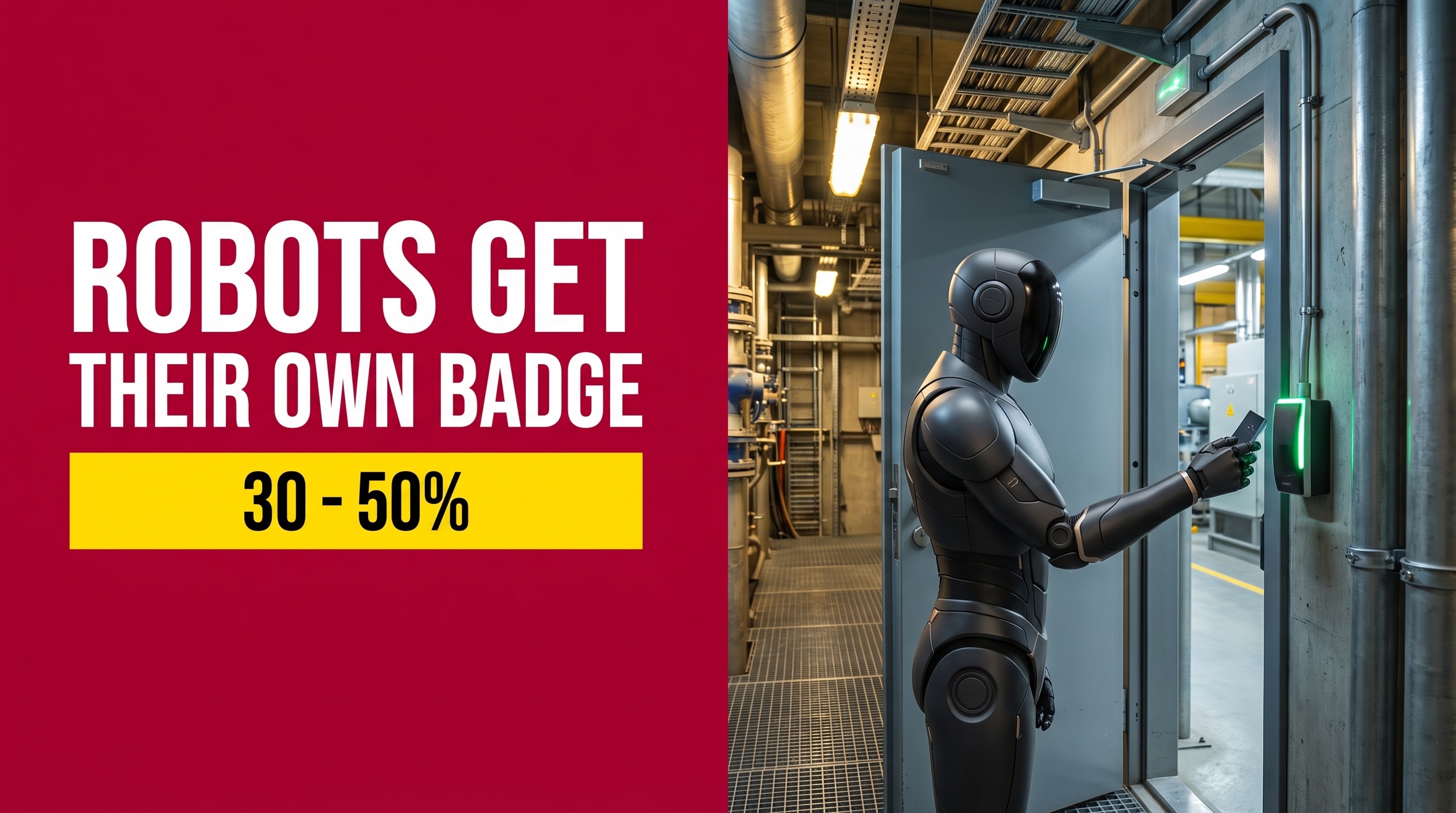 Symbolic image · AI-generated
An inspection robot from Zurich has had its own badge since September 24th. ANYbotics, dormakaba and LEGIC have unveiled a solution that allows the four-legged ANYmal to pass through locked doors independently: it carries a security module with a digital identity, requests access from the exos access control system and is treated according to the same rules as an employee, complete with logging. This was tested over several weeks at the 445-megawatt Whitegate power plant in County Cork, Ireland.
The door was previously the final barrier to automated inspection. 30 to 50 percent of critical equipment in a process facility stands behind fire-rated doors. Whoever grants permissions will also decide in the future where a machine can go.
Technically there are two approaches. An unlocked door is opened by a radar sensor via a retrofit rotating door drive from dormakaba. For a controlled door, the robot carries a LEGIC module with access credentials, and exos checks the request against the stored permissions. Every passage is logged in the same protocol as a human's badge.
All three companies are Swiss: ANYbotics, an ETH spin-off in Zurich, dormakaba in Rümlang, LEGIC in Wetzikon and part of the dormakaba Group. Three locations within half an hour's drive. Previously, the robot would stop before the fire-rated door until someone came and opened it. That was exactly what made the unsupervised patrol at two in the morning pointless.
What no press release mentions: a device that carries access rights becomes a target for attack. Whoever removes the module or replays the wireless signal moves through the facility with the robot's permissions. With the Unitree G1, as described here just weeks ago, a Bluetooth vulnerability was enough. The functionality should be retrofittable to existing ANYmal fleets later this year, followed by elevators, gates and turnstiles. Whoever enables them will first decide which doors a device running alone through the hall at night is allowed to open.
This article was created with the support of artificial intelligence and editorially reviewed. The article image is an AI-generated symbolic image, not a press photo.