Robot purchased, disassembled, sued: Universal Robots takes JAKA to EU Patent Court
Teradyne Robotics, the parent company of Universal Robots, filed suit on August 27 at the Unified Patent Court in Copenhagen against the German subsidiary of Chinese manufacturer JAKA. The case involves several patents covering hardware and software, and covers almost the entire cobot product line offered in the EU. A ruling would take effect in 17 EU member states, plus the United Kingdom and Spain.
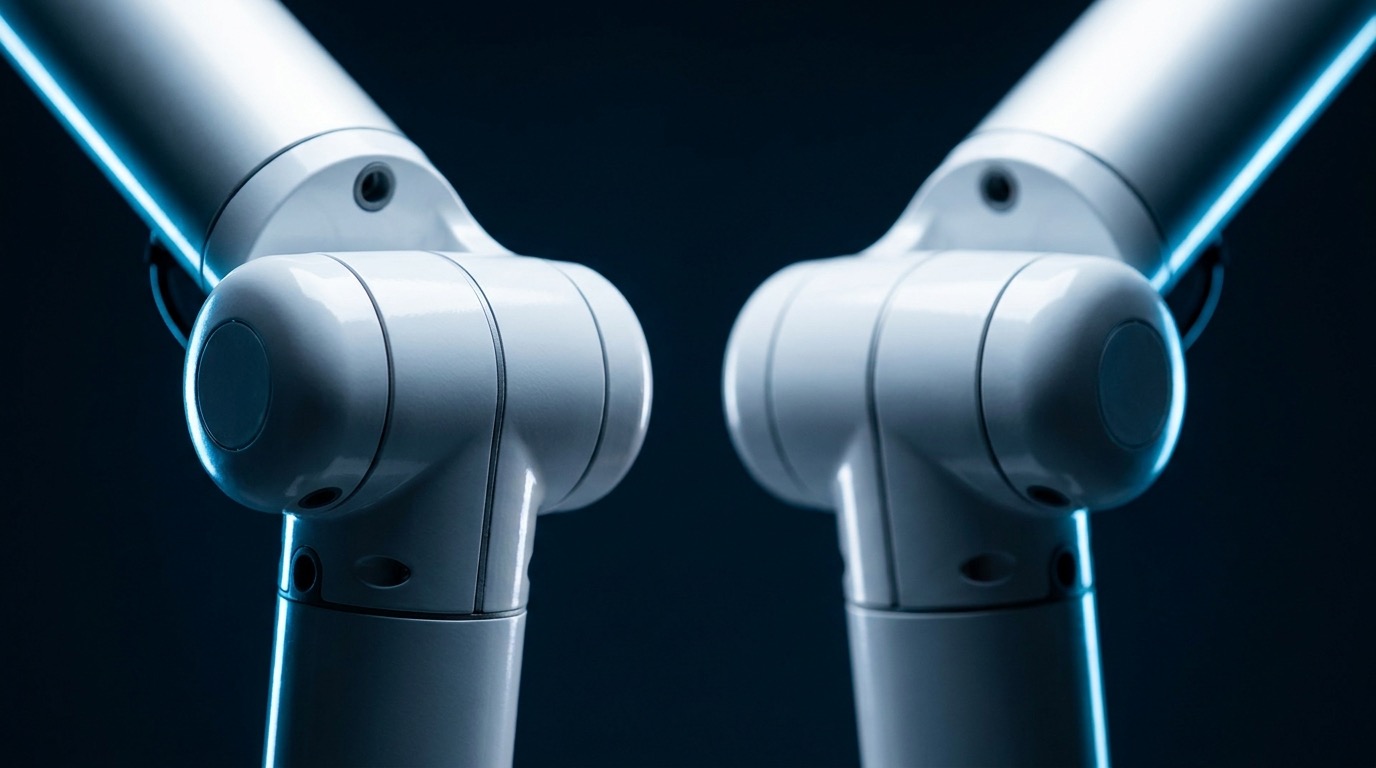 Symbolic image · AI-generated
Universal Robots purchased a robot from Chinese competitor, took it apart, and then sued. On August 27, Danish parent company Teradyne Robotics filed suit at the Unified Patent Court in Copenhagen against JAKA's German subsidiary. The case involves multiple patents covering both hardware and software, and encompasses nearly the entire cobot product line that JAKA offers in the EU. A ruling would take effect in 17 of the 18 participating EU member states, plus the United Kingdom and Spain.
Washington uses import bans to hold back Chinese robots; Europe chooses the legal route. This approach targets not a country of origin, but a product, and can shut out a supplier from half the continent. For Teradyne, this is the second lawsuit of this kind this year.
It all started with an observation, not a lawyer. David Brandt, head of development and technology officer at Universal Robots, says they placed the force- and power-limited arms from both companies side by side and were struck by the resemblance. They looked quite similar to each other. So the company purchased a JAKA arm and took a closer look. After that, suspicion of patent infringement became obvious.
Brandt describes a problem that every hardware manufacturer knows and no one solves. You have to build and deliver the robot for it to be a robot. And anyone who buys it can take it apart. Universal Robots protects itself with patents, copyrights, and trade secrets, but none of these tools prevent a competitor from having the finished product on their desk.
This is not the first attempt. In February, Teradyne sued the German subsidiary of Elite Robots in court, at that time over copyright infringement in control software. In April, the Hamburg Regional Court issued a preliminary injunction prohibiting the company from offering the disputed software and products in Germany. The proceedings continue. The new case is legally different because it involves patents rather than code, and because the Unified Patent Court has a completely different scope of authority than a German regional court.
Why Copenhagen? Teradyne Robotics is based in Odense, and alleged infringements are said to have occurred in Denmark, among other places. This is why the case ended up at the local chamber there. Group President Jean-Pierre Hathout stated the objective unmistakably: they will not tolerate unlawful copying of protected technology. Brandt adds that it is not primarily about money. They want JAKA to stop. JAKA itself has not commented so far.
A second argument put forward by Universal Robots is interesting. Cobots are designed so that humans can work in their vicinity, provided the risk assessment is correct. If copies do not achieve these safety properties in the same quality and someone is seriously injured, the damage affects not only the manufacturer but the entire category. Authorities and labor inspectorates would then scrutinize collaborative robotics more strictly overall. Whether this argument holds up or is simply a convenient one in competition will not be clarified by this proceeding.
Brandt emphasizes that this has nothing to do with China. It is about companies that copy, regardless of where they come from. That is the diplomatic version. The market situation looks different: it is Chinese suppliers who are shaking up the cobot market with aggressive pricing, and Teradyne is now conducting a second European proceeding within six months against exactly such competitors. Brandt himself says JAKA is not the only robot out there that looks suspiciously similar to theirs.
Economically, Teradyne Robotics is not backed into a corner. In the second quarter of 2026, the group generated 100 million dollars in revenue, up from 91 million in the first quarter and 75 million in the prior year quarter. This is the fifth consecutive growth quarter, and the vast majority comes from Universal Robots. The company has sold over 100,000 cobots to date. So it is suing from a position of strength, which makes things rather more unpleasant for the other side.
For Swiss businesses, the situation is double-edged. Switzerland is not part of the Unified Patent Court, so a ruling from Copenhagen does not apply directly here. However, procurement rarely runs directly from China in practice. Systems integrators, distributors, and service partners are usually European companies, and cutting off a supplier's EU distribution also affects spare parts, software maintenance, and training for customers outside the EU. Anyone evaluating an affordable cobot today should focus less on the purchase price and more on the question of who will service the equipment in five years.
This very question will be answered at a higher cost in the coming months than before. A UPC proceeding typically takes a good twelve months to complete. Until then, all parties involved will continue selling.
This article was created with the support of artificial intelligence and editorially reviewed. The article image is an AI-generated symbolic image, not a press photo.