$13,500 vs. $250,000: The US Robot Ban Becomes a Business Model
American robot dealer RoboStore founded Robo Inc. on August 10th. The company plans to disassemble, secure, and reassemble Chinese robots on Long Island so US customers can use them despite the import ban of July 28th. The price difference gives the whole venture momentum: $13,500 for a Unitree humanoid, over $250,000 for the American equivalent.
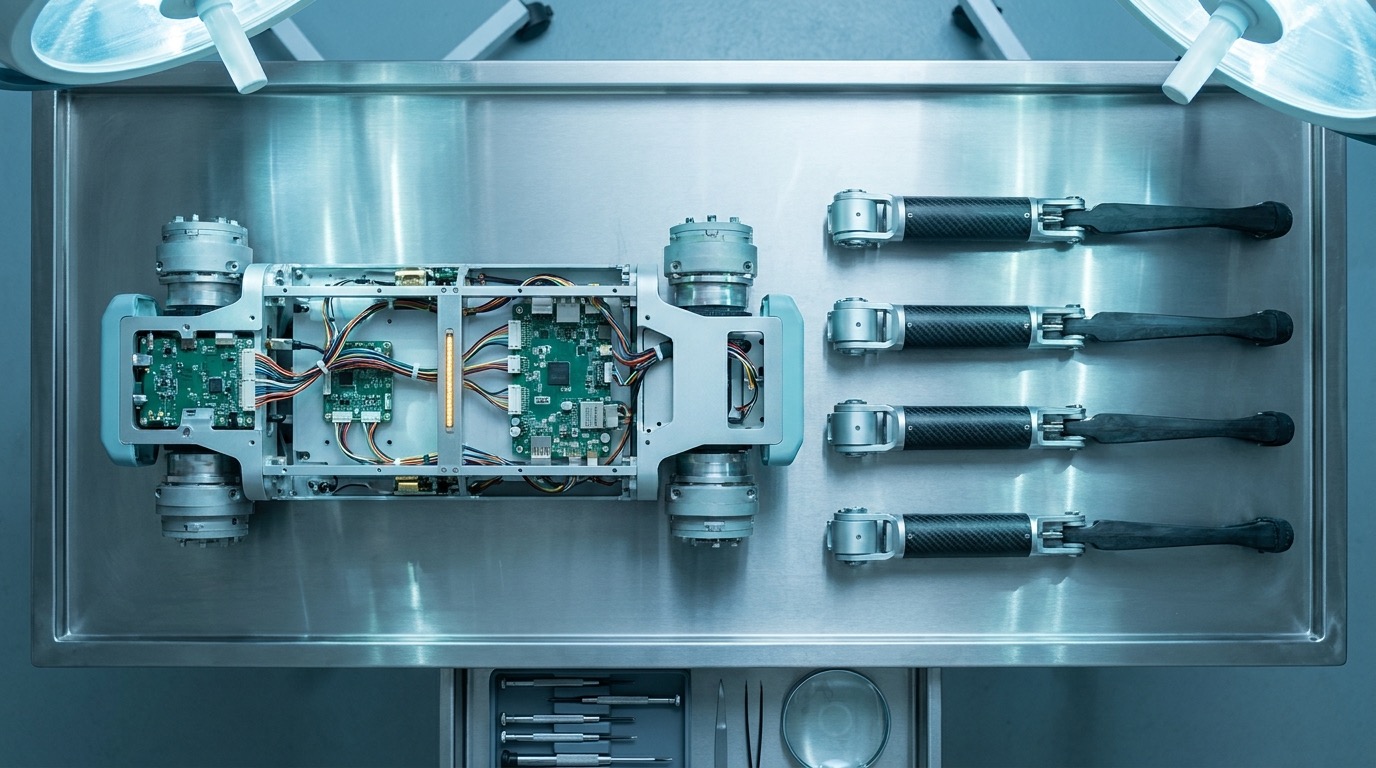 Symbolic image · AI-generated
On August 10th, American robot dealer RoboStore founded a second company to solve the problem created by its own government. Robo Inc. wants to disassemble, secure, and reassemble Chinese robots on Long Island so US customers can use them despite the import ban of July 28th. A 6,130 square meter hall, operational by January 2027. The decisive factor is price: A Unitree humanoid starts at $13,500, while the US equivalent from Agility Robotics costs over $250,000.
But the real problem runs deeper than firmware. China's State Security Law requires every company based there to cooperate with authorities, and the best American intermediary layer won't change that.
The upheaval was triggered by a decision from telecommunications authority FCC on July 28th. It placed networked robots over two kilograms from manufacturers in states classified as adversaries on its so-called Covered List. The same instrument had previously removed Huawei from American telephone networks and DJI from the drone market. The reason was two independently confirmed security vulnerabilities in Unitree devices.
The first, listed as CVE-2025-2894, was a hidden service in the firmware of the quadruped Go1. When booting up, the robot would automatically establish a tunnel to a cloud server. Anyone with the right key had full remote control. Researchers found affected devices in the networks of MIT, Princeton, Carnegie Mellon, and the University of Waterloo. The second vulnerability, documented as UniPwn, is located in the Bluetooth interface of models G1, H1, Go2, and B2 and spreads independently: an infected robot searches for the next one within radio range and takes it over. A public patch for both vulnerabilities remains unavailable to this day.
Robo Inc. is selling right into this gap. The parent company RoboStore from Plainview, New York, has according to its own statements delivered more than 1,500 humanoids and quadrupeds to 4,500 organizations, including Harvard, MIT, Amazon, and Nvidia. These figures are unverified, but they describe practical experience that is rare in this industry. "Customers don't want further distant promises, but solutions they can deploy today," says founder and CEO Teddy Haggerty. What his new company offers is essentially craftsmanship: checking data flows, blocking network access, disassembling firmware, limiting Bluetooth range, evaluating each installation individually. The ban is not circumvented in the process, because it only applies to new models. Already approved devices can continue to be sold, and there are still some in the warehouse.
For an IT department wanting to prevent a quadruped from making uncontrolled calls home, this approach is sufficient. For a defense contractor under ITAR rules, it is not sufficient, because there the origin of the hardware itself is the exclusion criterion. Robo Inc. doesn't answer this question but passes it on to the customer.
Why no one simply puts American hardware in the hall is shown in a Morgan Stanley calculation. Without Chinese components, the bill of materials for a Tesla Optimus second generation would increase from around $46,000 to $131,000, with actuators alone rising from about $22,000 to $58,000. China produces around half of all humanoids worldwide and controls between 63 and 89 percent of critical raw materials depending on the component. Agility Robotics, the only US provider with significant practical experience, reports over 65,000 operating hours with nine customers, but demands prices that universities and mid-sized companies simply cannot pay.
The drone industry has already gone through this pattern. When DJI landed on the same list in December 2025, a provider with around three-quarters market share essentially disappeared overnight, and the market is still reorganizing. Robots are more expensive, more complex, and stay in operation longer, so the transition period should last longer. That's exactly what the business model is built on. Whether this becomes a permanent company or just a bridge that disappears when this transition ends will not be decided on Long Island, but in the factories that someday must supply affordable actuators from outside China.
In Europe and Switzerland, there is currently no comparable ban. Unitree devices can be freely ordered, they stand in university labs, at trade shows, and in some operations. The two vulnerabilities are the same, but no one here is forced to act. Anyone operating a quadruped should therefore know which network segment the device is on, whether Bluetooth is active, and what it connects to at startup. Three questions that cost significantly less to ask before purchase than after. In the advertisements on robothub24, firmware has barely appeared so far, although it is now just as much a specification as payload capacity and battery life.
Unitree itself currently has other concerns than the American market. Its Shanghai IPO was oversubscribed by over 8,000 times among private investors.
This article was created with the support of artificial intelligence and editorially reviewed. The article image is an AI-generated symbolic image, not a press photo.