Four months old, worth a hundred million: Chinese money now flows into robot brains
Within a week, three Chinese startups received three-digit million-dollar amounts without having delivered any robots so far. They develop models instead of machines. The prospectus of Unitree itself shows how far capital has shifted.
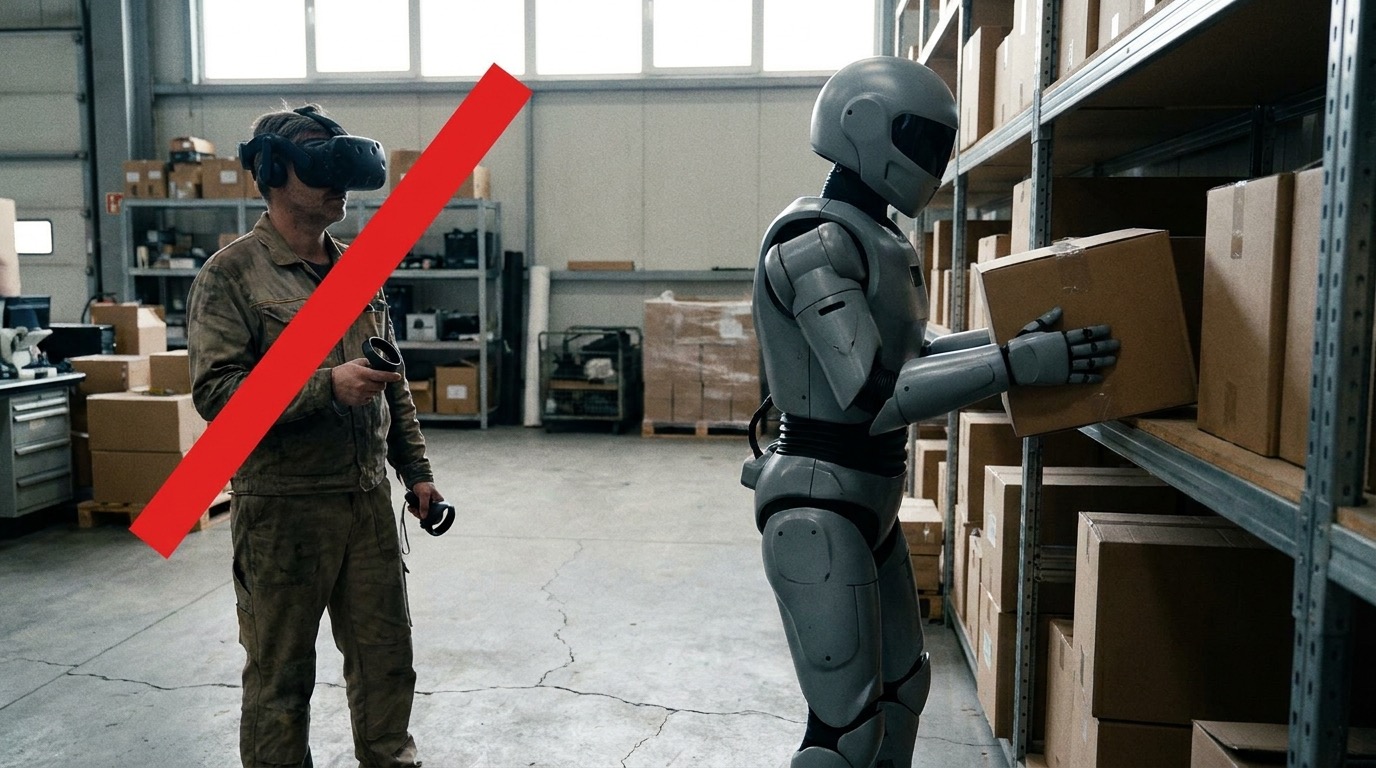 Symbolic image · AI-generated
On August 10, Shenzhen startup Noin Intelligence announced a seed round of 500 million yuan, equivalent to 74 million dollars. A week earlier, Discover Robotics from Wuxi raised 100 million dollars and became a unicorn, just one month after a first round of similar magnitude. PokeBot also received a three-digit million amount in early August, and this company has only existed since April. None of the three has delivered any robots so far.
Capital is thus shifting from hardware to brains. The extent of this shift is shown by Unitree itself in its IPO prospectus. Of its IPO proceeds, 2.02 billion yuan is earmarked for model development, while only 1.11 billion remains for the robot body.
Discover Robotics emerged from the Intelligent Industry Research Institute at Tsinghua University and subsequently expanded with engineers who previously worked at DJI. The company has so far presented primarily software. A hierarchical foundational model called ORION is to handle control, while a system called LOOP brings real and simulated motion data into a common feedback loop. It also sells a very light six-axis arm that operates without an external control cabinet and runs on 24 volts. This device is less a product than a tool, because anyone working with it generates precisely the motion data the model will later need.
Noin Intelligence approaches the same idea from a different angle. The company is working on a generative world model called GLOW and is building a household robot for it that folds down to less than forty centimeters in height. The device weighs around fifty kilograms and its two arms together carry six kilograms. Folding laundry and tidying up are the tasks the manufacturer mentions for it. More interesting than the mechanics, however, is the division of labour behind it. Thinking happens in the cloud, while the actual movement commands are executed on the device itself. Whether such a split works reliably in an apartment with children and open cabinet doors has not yet been verified by anyone outside the company.
PokeBot presents itself most strikingly. The company was founded in April and has since completed two funding rounds, led by Shunwei Capital and Matrix Partners. Xiaomi has also made a strategic investment. PokeBot became known through a video showing a robot independently preparing Mapo Tofu in nine minutes. Such a demonstration says nothing about reliability in everyday use. But it answers the question that currently concerns investors most: whether a system can maintain a long chain of actions without human intervention.
The numbers in the background are clear. According to data from ITjuzi, approximately 93.5 billion yuan flowed into China's embodied intelligence sector in the first half of 2026, distributed across 322 deals. The volume has thus increased fivefold compared to the previous year. At the same time, approximately 19,100 humanoid robots were delivered worldwide, up from 5,100 in the previous year, and more than 97 percent of them came from Chinese manufacturers. Deliveries are growing rapidly. Capital is growing faster.
That is precisely where the risk lies. Anyone entrusting three-digit millions to a company founded only in April is not buying revenue, but a speculation about the next five years. In China, policy amplifies this effect additionally because the fifteenth five-year plan has explicitly declared robotics a priority, and state-affiliated funds accordingly follow suit. At Discover Robotics, a municipal industrial fund from Wuxi sat at the table alongside IDG Capital. This mix creates momentum. It does not create strict selection.
For European providers, this is an uncomfortable message because competition is shifting to a field where money counts more than engineering expertise. Computing power and training data can simply be bought in large quantities. Swiss strengths lie elsewhere. They are evident in precision mechanics and control engineering, and they are evident in research at ETH and EPFL, where legged robots and spatial understanding have been at the world's forefront for years. But the best control is of little use if the model comes from Shenzhen and the interface belongs to a foreign provider.
Anyone here deciding on the purchase of a robot should therefore look more closely. It is worth asking whose software is in the device and where the operating data ultimately ends up. Most importantly, it is worth asking whether the model can later be exchanged. This sounds like tedious bureaucracy. But it determines whether a purchased robot will still belong in five years to whoever paid for it.
This article was created with the support of artificial intelligence and editorially reviewed. The article image is an AI-generated symbolic image, not a press photo.