150.80 Yuan per share: The first humanoid manufacturer with profit gets an IPO price
On August 6, Unitree set the offering price for its Shanghai IPO: 150.80 Yuan per share, valuing the Hangzhou manufacturer at around nine billion dollars. For the first time, the humanoid industry is getting a public price for a company that actually makes money. The timing is crucial, as the American market has been effectively closed to new robots from China since the end of July.
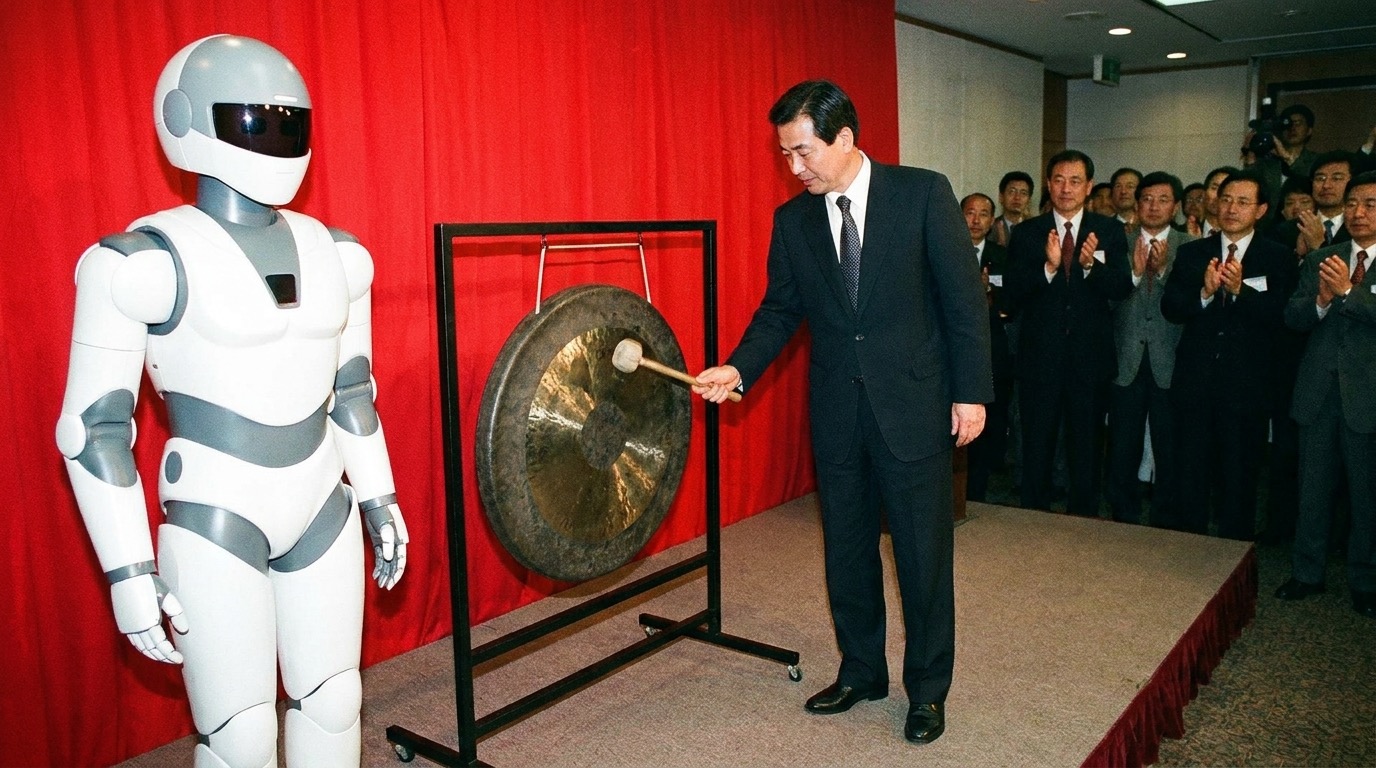 Symbolic image · AI-generated
On August 6, Unitree set the offering price for its IPO: 150.80 Yuan per share. This values the Hangzhou manufacturer at 61 billion Yuan, around nine billion dollars, and raises 6.1 billion Yuan in fresh capital. For the first time, a humanoid manufacturer is getting a public valuation that actually makes money: 1.7 billion Yuan in revenue last year, 600 million Yuan in adjusted profit.
By comparison, American Figure AI is valued privately at 39 billion dollars, without any significant series production revenue. The timing is critical: Since the US FCC's decision on July 28, the American market for new robots from China has been effectively closed. The subscription period begins on August 10.
Among the strategic investors is a name that stands out: DeepSeek. The parent company of the AI developer from the same city is subscribing to 933,400 shares for around 141 million Yuan and committing for three years. That's not a lot of money relative to the size of the offering. Yet it serves as a signal because it marks the first time that China's most renowned model builder and China's largest robot manufacturer are visibly working together. Overall, around twenty percent of the new shares are going to strategic subscribers, with 40.45 million shares being sold, representing ten percent of the expanded capital.
Just how hot the market is for this stock showed itself in the preliminary inquiry: the institutional tranche was oversubscribed over 2600 times. In the prospectus from March, Unitree had targeted around four billion Yuan at a valuation of roughly 42 billion. Five months later, that has become 61 billion, without anything fundamental changing in the business. What's remarkable, then, is what analysts at CITIC Securities are writing: they value fair value at six to twelve months after listing at 50.6 to 55.9 billion Yuan. In other words, below the offering price. That still corresponds to roughly twenty times the expected annual revenue and around eighty times the expected profit.
The business figures themselves are unusually robust for this industry. Revenue more than quadrupled in 2025, adjusted profit increased by 674 percent, gross margin is around sixty percent. Most importantly, the focus has shifted: at 867.8 million Yuan, humanoids are for the first time the largest business, larger than the four-legged robots that made Unitree famous. The company delivered over 5,500 humanoid machines last year, more than any other manufacturer worldwide.
The catch is in the prospectus, and Unitree writes it remarkably openly. Over forty percent of revenue comes from abroad, the US accounted for 18.39, then 19.54 and most recently 13.30 percent of the three reported periods. Since the FCC put foreign humanoids and four-legged robots on its Covered List, new models practically no longer receive the necessary device approval. Already approved devices can continue to be sold, but the company itself warns that existing approvals could also be revoked. A manufacturer that sells ten percent of its capital at a record price while simultaneously cautioning that a fifth of its foreign business could evaporate is a pretty precise expression of this market.
For Europe, this has a side effect that's easy to overlook. If the largest sales market outside Asia disappears, the rest of the world becomes more important, not less. Unitree devices are among the few humanoids you can actually order here and set up in a laboratory or factory floor, and price pressure is likely to increase rather than decrease.
More interesting than the question of whether the stock rises is what the listing does to the industry. Until now, humanoid manufacturers have been measurable almost only by demo videos and funding rounds. Starting next week, there will be quarterly figures, margins, and a price that anyone can look up. Whoever offers a robot in the future will have to be measured against this benchmark, including on robothub24.ch. The large valuations in the West now have an uncomfortable point of comparison.
This article was created with the support of artificial intelligence and editorially reviewed. The article image is an AI-generated symbolic image, not a press photo.