Billion-dollar valuation without a single robot delivered: Humanoid from London is Europe's new unicorn
London-based startup Humanoid has completed a Series A round of 152 million dollars and is now valued at 1.35 billion dollars. Behind the investment are venture capital firms as well as Bosch and Schaeffler. The two-year-old company has not delivered a single robot to date.
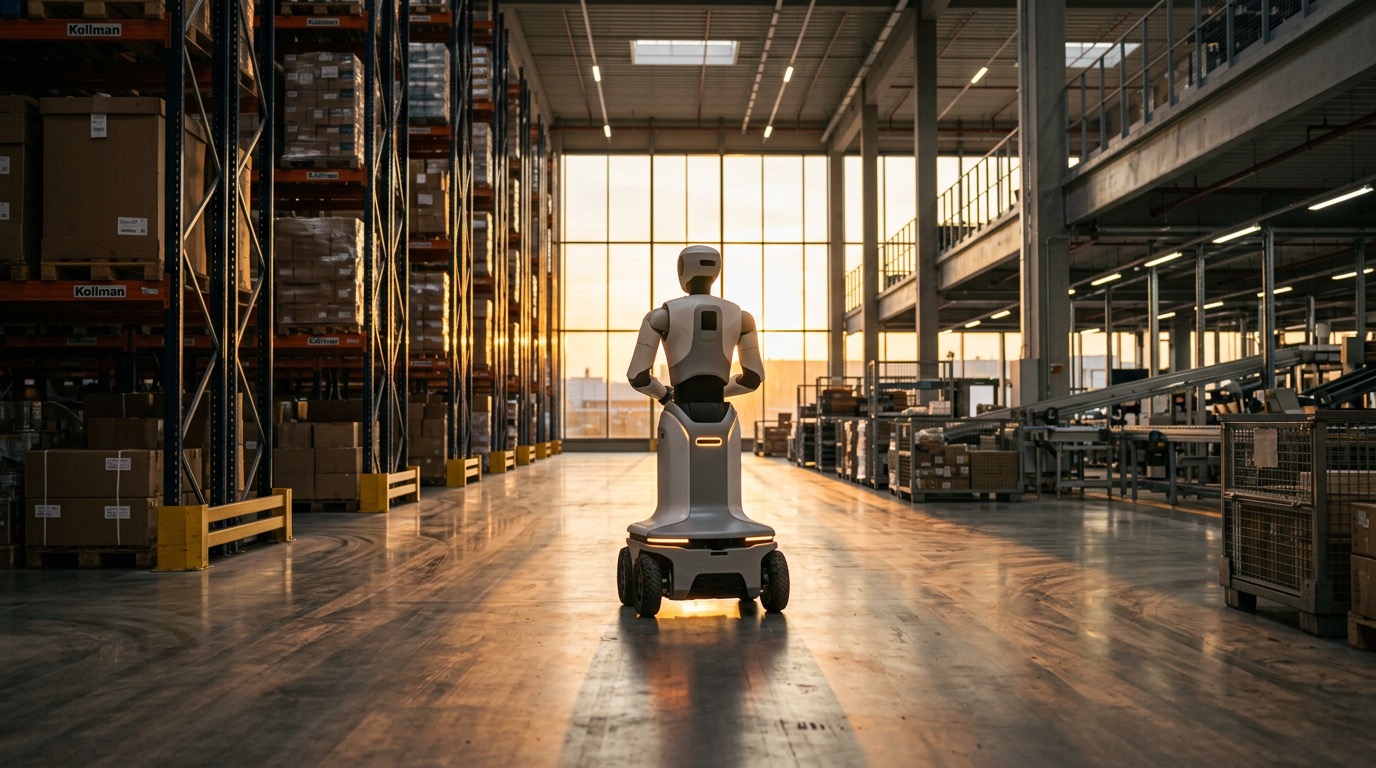 Symbolic image · AI-generated
34,000 pre-orders worth 2.4 billion dollars, delivered: zero. With this track record, London-based startup Humanoid completed a financing round of 152 million dollars on July 23rd, the largest Series A ever raised by a European humanoid robot manufacturer. The valuation now stands at 1.35 billion dollars. The company was founded just over two years ago.
Behind Humanoid is Artem Sokolov, an entrepreneur who grew his family business to a billion dollars in revenue over more than a decade and sold it in August 2025. He invested approximately 30 million dollars from his personal wealth into his own robotics company, founded in May 2024, as seed capital. He cites his grandparents' factory work as motivation: machines should take over the repetitive tasks that wear people down. "What we've achieved in such a short time would normally take a decade," he was quoted as saying about the financing round. Today his teams work in London, Boston, and Vancouver.
The round was led by Prime Movers Lab, the American investment firm that also backs Figure AI's 39-billion-dollar valuation. More interesting than the venture capital backers, however, are two names from traditional industry: Bosch and Schaeffler. Bosch isn't just writing a check—its subsidiary Robert Bosch Robotics will take over manufacturing as a contract manufacturer and contribute its expertise in hardware and supply chains. Schaeffler CEO Klaus Rosenfeld justified the investment by saying that humanoid robotics is developing "rapidly from vision to industrial reality." Two of Europe's largest suppliers are thus committing to a startup that hasn't yet brought a product to market.
The product itself deviates from the script of competitors. While American and Chinese manufacturers almost universally opt for two legs, Humanoid is bringing its HMND 01 platform to market first on wheels, controlled by its proprietary AI system KinetIQ. For logistics warehouses and factory floors, this is pragmatic—wheels are cheaper, more stable, and faster. The company claims to have developed the alpha version in seven months and the bipedal version in five, though these claims have not been independently verified. A beta version is expected in the fourth quarter of 2026.
The title of Europe's first pure humanoid unicorn, which the company now boasts, should however be read with caution. Neura Robotics, with development headquarters in Zurich, completed a Series C of up to 1.4 billion dollars in June and is valued significantly higher, though it builds collaborative industrial robots in addition to humanoids. Globally, the figure is anyway put into perspective: Figure AI comes in at 39 billion, Apptronik at over five billion. Goldman Sachs estimates the entire humanoid market for 2035 at 38 billion dollars, so Figure's valuation alone already exceeds that today. Someone is very badly mistaken here—either the analysts or the investors.
Then there are the 34,000 pre-orders. Humanoid doesn't disclose how binding they are or who is behind them, and until the first delivery, the number remains a promise. Nevertheless, the round shifts something: with Bosch as the manufacturer, a fully European production chain for humanoids is emerging for the first time. For Swiss companies considering robots in warehouses and manufacturing in two or three years, this could mean an option from the neighbourhood alongside providers from California and Hangzhou.
This article was created with the support of artificial intelligence and editorially reviewed. The article image is an AI-generated symbolic image, not a press photo.