SoftBank exits, Hyundai takes over completely: Boston Dynamics now belongs to an automaker
On July 16, SoftBank sold its remaining stake in Boston Dynamics to Hyundai. The Korean automotive conglomerate now controls the world's probably most famous robot maker with one hundred percent ownership. Behind the deal lies a bet on the factory floor.
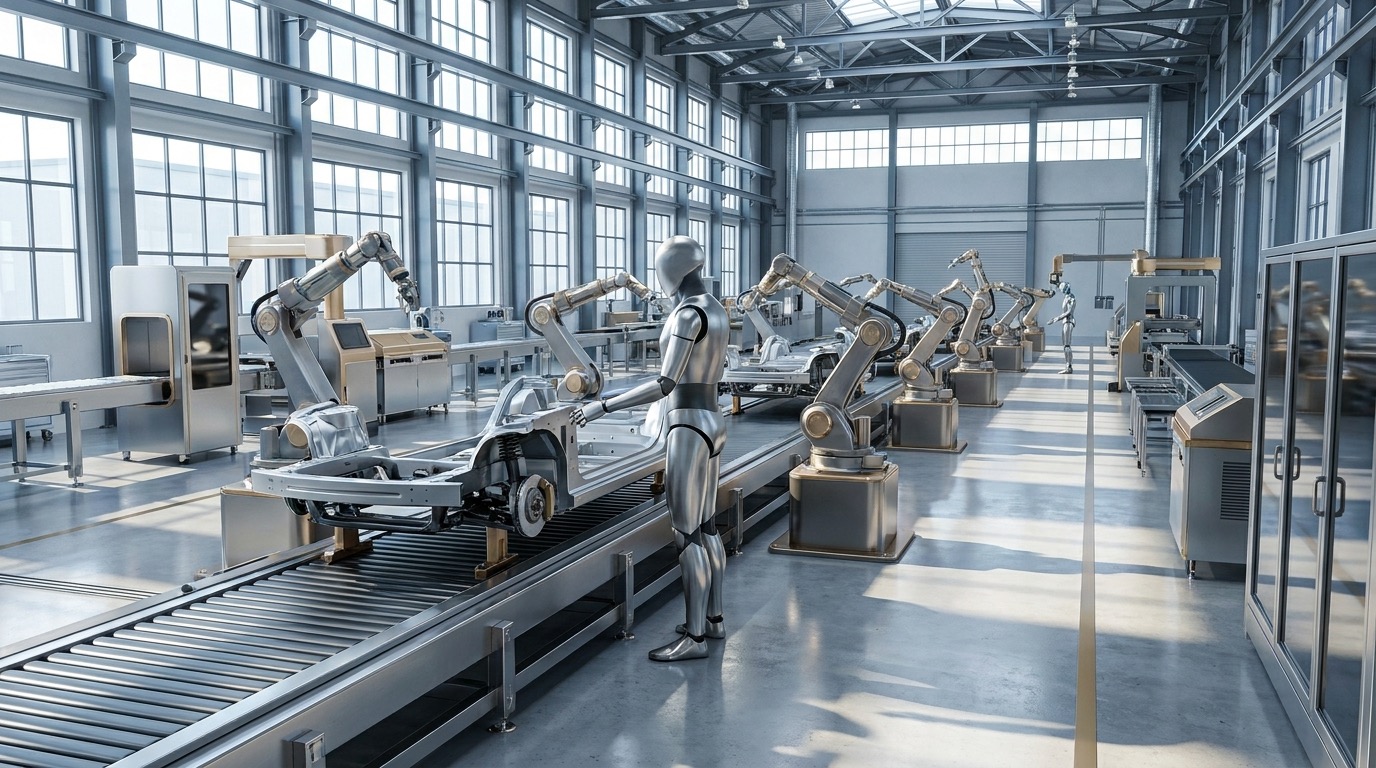 Symbolic image · AI-generated
Around 325 million dollars. That's what Hyundai is paying to acquire the last 9.65 percent of Boston Dynamics still held by SoftBank. In mid-July, the Japanese investor exercised what's known as a call option, a contractual clause from 2020. It essentially stipulated: If Boston Dynamics fails to go public within approximately four years, SoftBank can return its remaining stake to Hyundai under previously agreed terms. That's exactly what has now happened.
The price values Boston Dynamics at roughly 3.3 billion dollars. This is almost precisely the valuation at which Hyundai already acquired the majority stake in 2021. So in four years, barely any increase in paper value, despite this being a period when hardly any robot has been shared and commented on as much as Atlas and the robot dog Spot.
Those who know the company usually know it from exactly these videos: a humanoid jumping over boxes, doing a backflip, catching itself after a push. For years, Boston Dynamics was primarily a laboratory with world renown and a public favorite, but not a company that made serious money with robots. That should change now.
Hyundai doesn't think in viral clips, but in factory floors. The conglomerate has announced that by 2030 it will invest around 87 billion dollars in South Korea and another 26 billion in the USA, with a large portion flowing into what the industry calls Physical AI: artificial intelligence that doesn't just write texts but controls machines in the real world. The new, fully electric Atlas is set to start working in the Hyundai plant near Savannah in the US state of Georgia from 2028. First in sorting and staging parts, later in assembly and heavy, repetitive manual tasks.
The business model behind this is interesting. Instead of simply selling robots, Hyundai wants to offer them on a subscription basis, including software updates, remote maintenance, and regular improvements over the network. Robotics as a Service, following the pattern of cloud services. The idea is simple: A manufacturer shouldn't have to lay out hundreds of thousands at once, but instead pay a monthly fee and keep the machine as long as it pays for itself.
While a dozen humanoid startups in China are currently rushing to go public to raise capital, Boston Dynamics is taking the opposite path: completely out of IPO fantasy, completely into an industrial conglomerate with deep pockets. The failed IPO that triggered SoftBank's exit in the first place almost becomes a side note. The company no longer needs the stock market if its owner itself manufactures automobiles in the millions and puts the robots directly in its own factories.
The procedure is instructive for Swiss industrial businesses for two reasons. First, it shows where things are heading: the humanoid robot becomes a manufacturing tool, not a gadget for the living room. Second, the subscription model will likely change market entry even for smaller companies. Anyone in a Swiss factory today thinking about automation no longer needs to ask whether a nearly two-meter-tall humanoid fits the budget, but rather whether a monthly fee makes sense. That's a different calculation.
Whether Hyundai wins the factory bet won't be decided in 2026. Boston Dynamics plans to deliver the first examples of the new Atlas this year, with broader series deployment planned for 2028, and more demanding assembly work for 2030. Much remains announcement until then. One thing is certain: the world's most famous robot maker now belongs entirely to an automotive conglomerate, and it has little interest in pretty videos.
This article was created with the support of artificial intelligence and editorially reviewed. The article image is an AI-generated symbolic image, not a press photo.