Apptronik showcases Apollo 2: a robot designed primarily for data collection
Apptronik has opened a massive training facility for humanoid robots in Austin and simultaneously unveiled the second generation of its humanoid. Apollo 2 is less a product than a data gatherer: what it learns flows directly into Google DeepMind's robotics models.
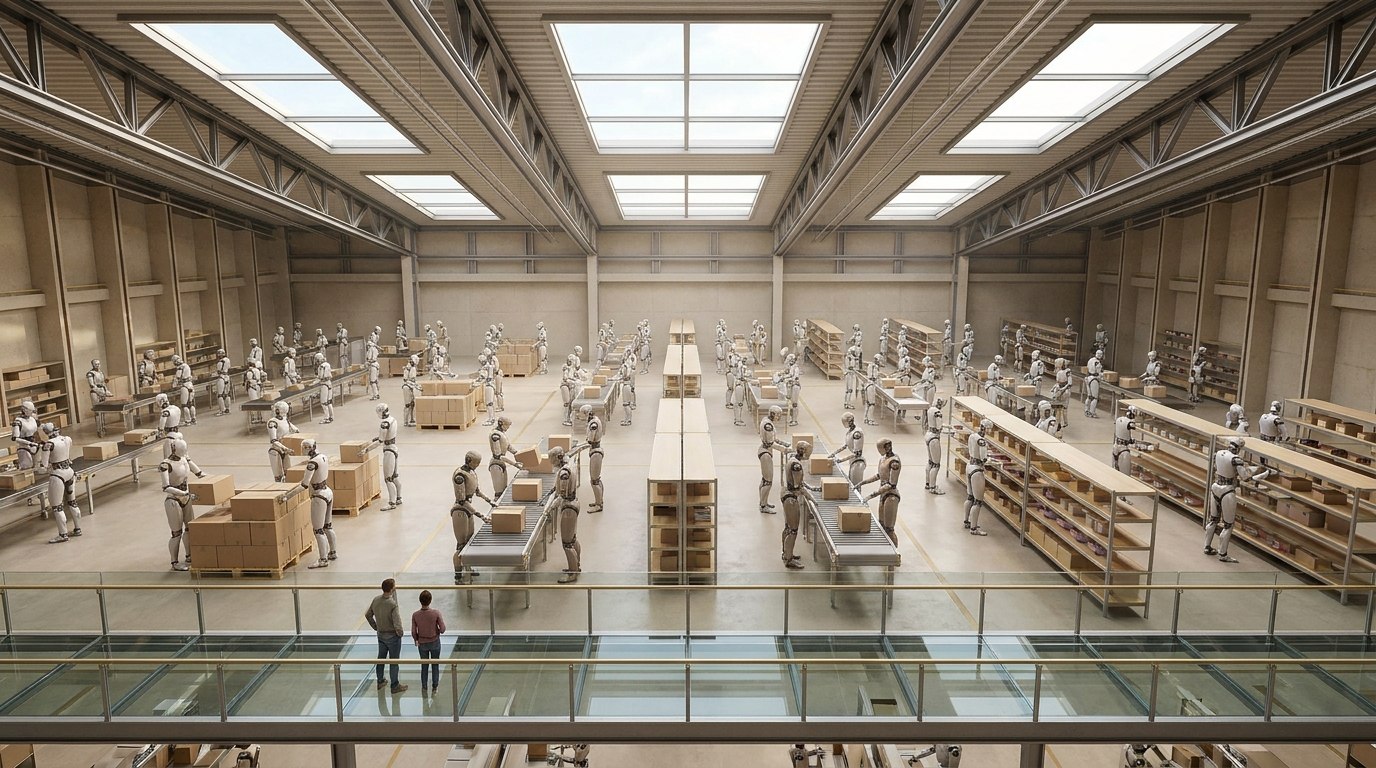 Symbolic image · AI-generated
Just over 8,000 square meters, spread across a single hall in Austin, Texas. This is where Apptronik will have its robots work all day going forward, not because the work is urgent, but because it generates data. The Robot Park, opened this week in significantly expanded form, is the centerpiece of a strategy that sets the company apart from the rest of the industry.
At the same time, the Texas-based company unveiled the second generation of its humanoid. Apollo 2 comes in two versions: on two legs or on a mobile platform. The wheeled version meets current safety standards for mobile industrial robots and can therefore already operate today in ordinary factory halls and warehouses. The two-legged variant remains technically more challenging, but it can go anywhere humans have worked so far, including stairs and narrow passages.
What is remarkable is what this new robot is actually intended for. Apollo 2 is not meant to be a bestseller. It is the machine with which Apptronik collects training data for its successor, the planned commercial model Apollo 3. In the Robot Park, the robots practice tasks from logistics, manufacturing, and retail, sometimes remotely controlled by humans, sometimes autonomously. Every movement is recorded.
This data flows into Gemini Robotics, Google DeepMind's robotics foundation models, which Apptronik has been researching with for some time. "The industry has spent years showing what robots can do in demos. We focus on what they accomplish every day at work," says company CEO Jeff Cardenas. Robots work, collect data, improve, and the cycle begins again.
Apptronik is no newcomer. The company emerged from a robotics lab at the University of Texas and has built 15 robots in nearly ten years, including Valkyrie for NASA. Earlier this year, CHF 520 million in fresh capital came in, bringing the total to nearly CHF 1 billion. Around 300 employees work for the company today. Mercedes-Benz is testing Apollo in vehicle manufacturing, logistics company GXO in its warehouse.
Behind this effort lies a simple insight: the bottleneck in the humanoid industry is no longer motors or gearboxes, but training material. Language models could read half the internet, but there is no comparable archive for manipulation tasks. Chinese manufacturers address the problem with sheer volume—AgiBot, for example, has just delivered its 15,000th robot. Apptronik counters with controlled data quality: fewer robots, but every movement precisely captured.
For industrial operations, including those here in Switzerland, the dual strategy is particularly interesting. The wheeled version lowers the barrier because it fits into existing safety concepts and requires no new approvals. Companies planning automation in the coming years may no longer ask whether a humanoid is suitable, but whether it should drive or walk. Apptronik is not yet saying when Apollo 3 will hit the market. One thing is certain: by then, it will have had plenty of practice.
This article was created with the support of artificial intelligence and editorially reviewed. The article image is an AI-generated symbolic image, not a press photo.