Safety as the missing piece: Nvidia wants to teach robots to work safely
Nvidia presented a safety system for collaborative robots at the Automate trade show in Chicago. For the first time, it bundles all protective layers from the chip to certification and could lower the biggest hurdle in deploying humanoids. For Swiss companies that want to operate machines alongside people, this is far more than a footnote.
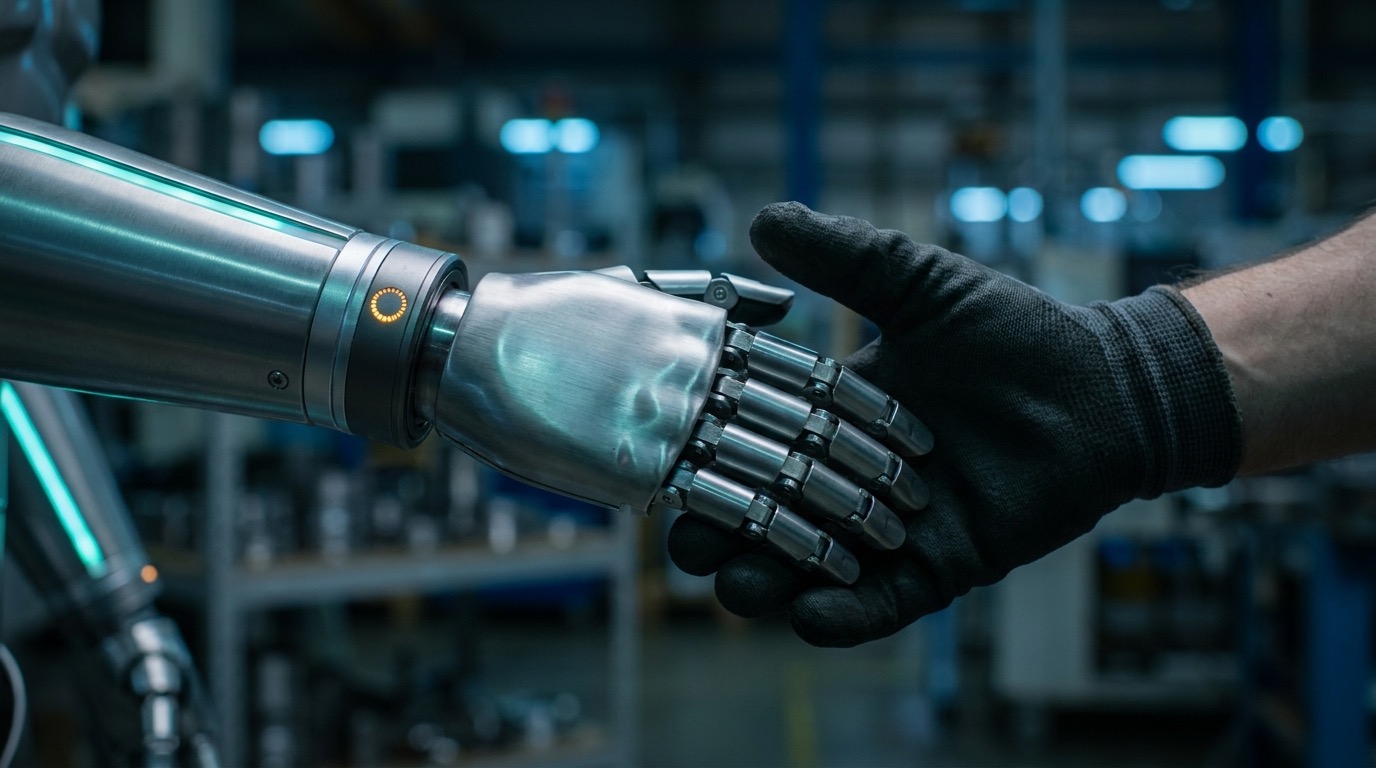 Symbolic image · AI-generated
On June 22, Nvidia presented a system at the Automate trade show in Chicago that may seem unspectacular at first glance yet addresses one of the industry's biggest open questions. Halos for Robotics is what this toolkit is called, and it aims to teach robots to work alongside people without injuring them. It is not movement, not gripping force, but safety that has become the actual product.
So far, manufacturers have built the safety features of their machines largely on their own. Every sensor, every emergency stop, every certification was individual work, expensive and time-consuming. Nvidia now bundles these layers from the chip level to regulatory approval into a single stack. According to the company, it incorporates insights from autonomous driving, around seven million lines of verified code, and a collection of safety certifications that a single robotics startup could hardly ever produce on its own.
The names backing the announcement show that it is more than just slides on a stage. Over forty partners have joined, including Boston Dynamics and Agility Robotics. Agility is already using the system in its legged robot Digit, which handles entire shifts in Amazon warehouses and at automotive supplier Schaeffler. It is precisely where humans and machines share the same floor that determines whether a humanoid is suitable for everyday use or becomes a risk.
For Swiss companies, this is no marginal issue. Anyone placing a robot in a factory is liable, and the Machinery Directive shows no mercy if a device without proper safety functions injures a person. Until now, especially smaller firms have been deterred by the fact that certifying a collaborative robot can be almost as demanding as acquiring it. A pre-fabricated safety foundation lowers this hurdle, at least in theory. On top of that, the EU's AI Act takes effect in August, and experience shows that what applies there quickly spreads to the Swiss market.
Still, one should view this soberly. A safety stack from Nvidia does not turn an underdeveloped robot into a safe one, and the dependence on a single vendor that already supplies computing chips, simulation, and models makes some uneasy. Moreover, safety cannot be solved by software alone. It emerges from the interplay of hardware, standards, maintenance, and the person who actually finds the emergency stop button when it matters.
Yet the announcement marks a turning point. For years, the debate centered on whether humanoids could do useful work at all. Now it is about how quickly factories will adopt them. Anyone posting or seeking a collaborative robot in an advertisement will soon look more closely at what safety features are actually built in. The question of safety has thus arrived where it belongs: not in the fine print, but front and center.
This article was created with the support of artificial intelligence and editorially reviewed. The article image is an AI-generated symbolic image, not a press photo.