A hotel where only robots work: China conducts the practical test
On an artificial island in the Pearl River Delta, the first hotel to be operated entirely by robots is being built. Reception, room service, cleaning, and luggage handling are managed by different machines that share the same AI. Test operations begin in late 2026, opening in 2027—a preview of how far automation in the hospitality industry can go.
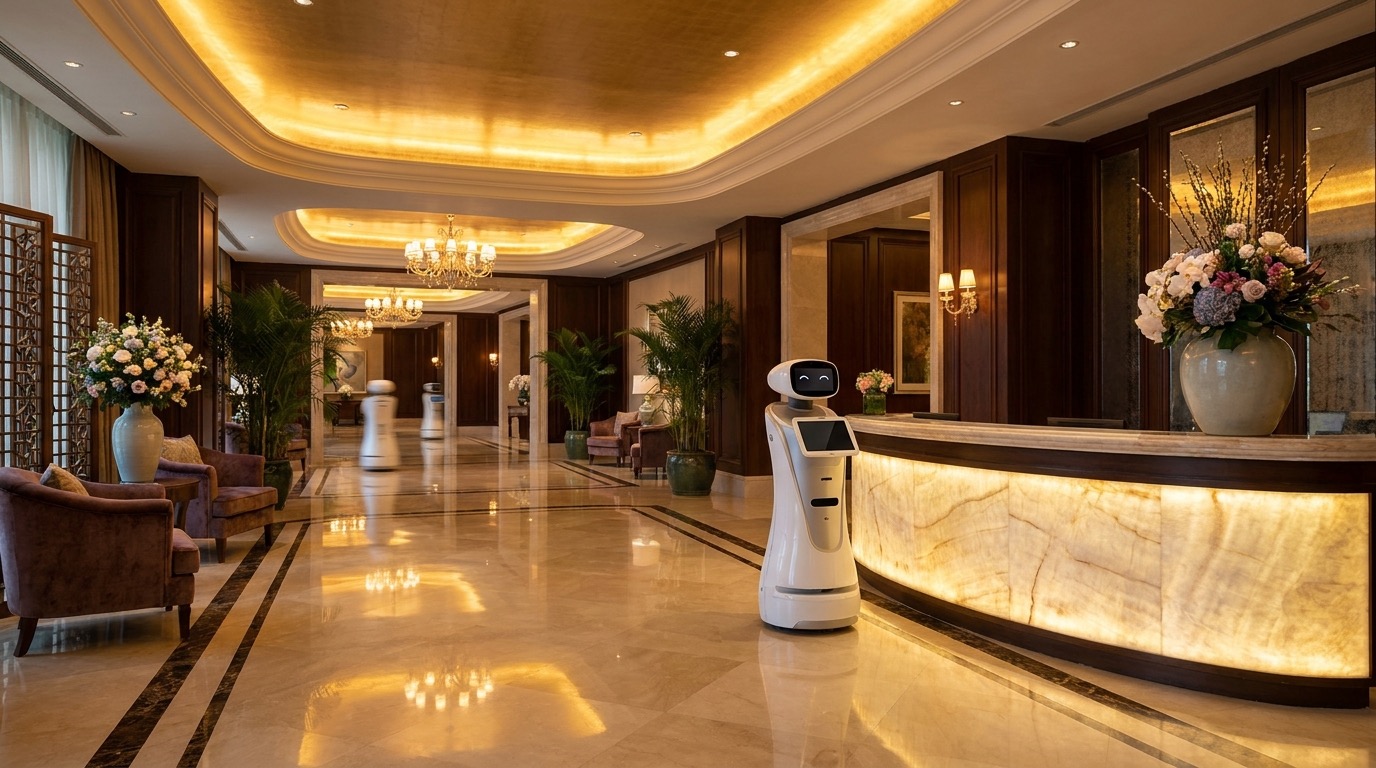 Symbolic image · AI-generated
44 rooms, an island in the Pearl River Delta, and not a single person in service: China is building the first hotel to be operated entirely by robots. Robotics manufacturer Pudu Robotics announced it together with a state-owned tourism company from Shenzhen on June 26 at a presentation in the city.
The hotel will stand on West Artificial Island, an artificial island that is part of the major bridge and tunnel connection between Shenzhen and Zhongshan and only opened in December 2025. Reception, room service, cleaning, luggage transport, even coffee and snacks: each role is handled by its own robot type. A greeting robot recognizes gestures, a transport robot brings luggage from the entrance to the rooms, cleaning robots detect waste using cameras.
The real innovation lies not in the individual machines themselves, but beneath them. All devices access the same AI foundation; Pudu calls it a shared intelligence framework. Cleaning, delivery, and reception robots thus share the same software base and are supposed to work in coordination with each other, rather than operating as a collection of isolated solutions side by side. Pudu's chief technology officer Cong Guo speaks of an operation "without service gaps and without human interruption."
There is still some way to go. Initial test operations with a handful of rooms are scheduled to begin in late 2026, with the official opening planned for 2027. Whether guests will find a stay without human contact pleasant or sterile remains to be seen. Online comments on the announcement promptly invoked "Westworld," and the announcement does not answer the question of who helps if something goes wrong at night.
For Switzerland, the case is less exotic than it sounds. Delivery and cleaning robots are already in use in some hotels and hospitals, and staff shortages in the hospitality industry are an ongoing issue here too. The difference lies in the completeness. China is testing what happens when you automate not just a single work step, but the entire process.
For now, it is an announcement with great symbolic value and limited operations. But the direction is clear. It is not a single spectacular humanoid that determines whether robots gain a foothold in everyday life, but the question of whether many different machines can work together seamlessly. This is precisely what this hotel aims to prove.
This article was created with the support of artificial intelligence and editorially reviewed. The article image is an AI-generated symbolic image, not a press photo.