Grasping instead of just driving: Why Bear Robotics is acquiring British startup Kinisi
Bear Robotics has delivered over 16,000 service robots that roll through restaurants and warehouses. What they lack are hands. With the acquisition of British startup Kinisi, the company wants to close exactly this gap, and in doing so, reveals where the real hurdle for the entire industry lies.
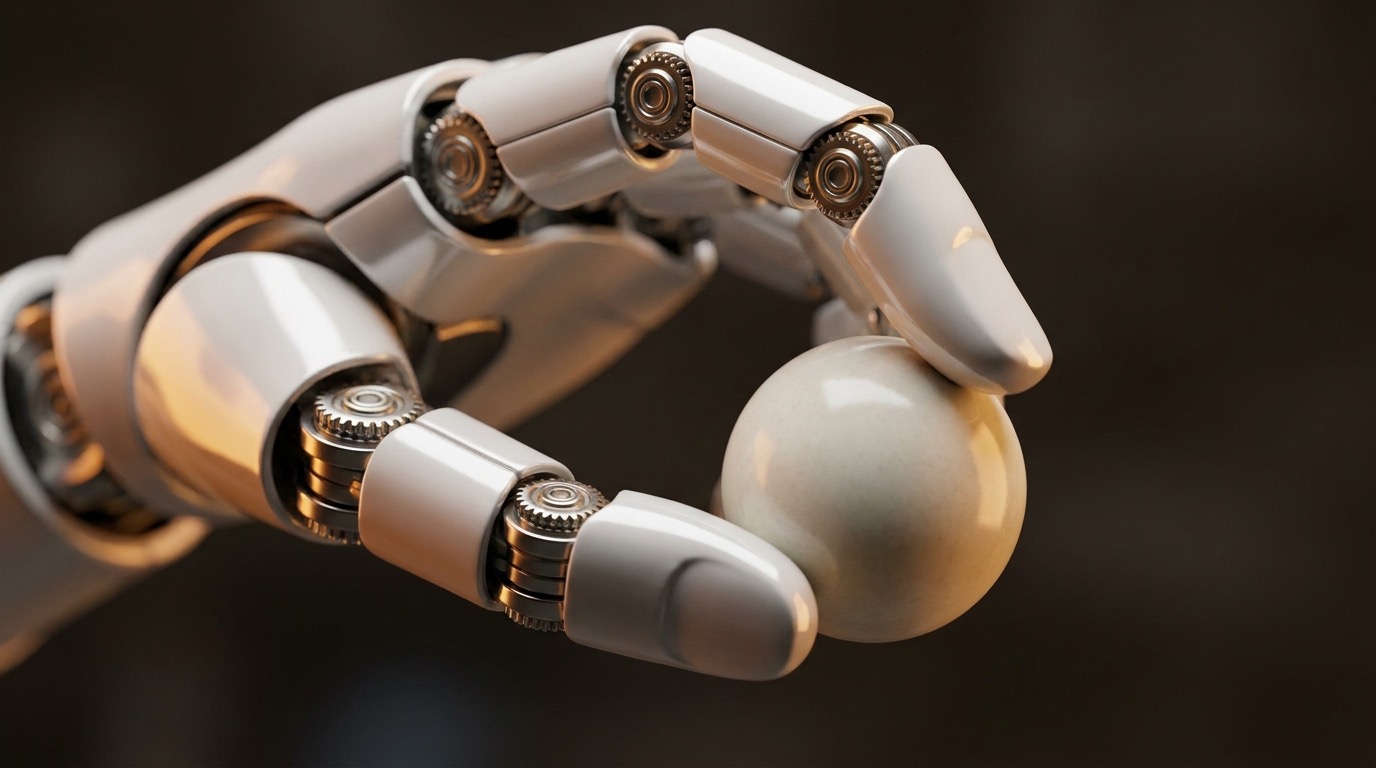 Symbolic image · AI-generated
On June 22, Bear Robotics signed a binding agreement to acquire British startup Kinisi Robotics. The deal is expected to close in the coming days, but both sides remain silent on the purchase price. Behind this terse announcement lies a bet on what robots will really need to be able to do in the coming years.
Bear Robotics is primarily known from the gastronomy sector. The California-based company builds those rolling service robots that deliver plates to tables in restaurants or transport towels to rooms in hotels. Since its founding in 2017, the company has delivered over 16,000 such machines according to its own statements. In addition, there are floor cleaners and a cloud platform that coordinates entire fleets. The devices find their way through crowded, constantly changing spaces without following fixed rails. But there is one thing they cannot do: grasp.
This is precisely where the real hurdle for the industry lies. Navigation is largely considered solved, grasping is not. Recognizing an object, grasping it correctly and setting it down again without crushing anything or dropping it is far more difficult for a machine than rolling from one location to another. "Manipulation AI is the layer that brings our robots from mere navigation and delivery to actually accomplishing the work in front of them," says John Ha, founder and CEO of Bear. Most companies are just now trying to move from pilot projects to finished products. Bear is already there and is now expanding an existing fleet toward full automation.
What Kinisi brings is this missing layer. The team from Bristol is developing the KR1, a wheeled robot with a humanoid upper body, built for picking, sorting, and rearranging objects in industry, logistics, and hospitality. The backstory is intriguing: From the start, Kinisi has built on Bear's navigation stack, meaning the same technology that powers the service fleet. And company founder Brennand Pierce was once a co-founder of Bear. With the acquisition, he returns as Chief Robotics Officer and will continue to lead the Bristol location, which is set to serve as Bear's European development hub.
Technically, the most interesting detail is something separate from the robot itself. Kinisi has developed an affordable, manufacturer-independent glove that allows a person to simply demonstrate and immediately record a grasping motion. This makes it possible to collect training data without consuming expensive robot time. Combined with the data that Bear's fleet generates daily at thousands of locations, the AI models should be able to train much faster than any single company could ever achieve alone.
For a Swiss audience, this case is instructive for two reasons. First, service robots, which are already in operation here in restaurants, hospitals, and warehouses, are moving closer to genuine all-purpose capability. The same device could soon not only deliver but also load and unload. Second, the deal shows how rapidly the still-young humanoid scene is consolidating. Rather than each company building its own robot from scratch, established providers are strategically acquiring the building blocks they lack. Those with a functioning fleet, paying customers, and a supply chain no longer need to start manipulation research from zero.
Whether the rolling waiter becomes a universal helper will now depend on how cleanly grasping and driving can be integrated on a single platform. Until closing, both companies continue working separately, with existing pilot projects running unchanged. After that, the real work begins.
Editor's note: This article was created with the support of artificial intelligence and editorially reviewed. The lead image is an AI-generated symbolic image and not a press photo.
This article was created with the support of artificial intelligence and editorially reviewed. The article image is an AI-generated symbolic image, not a press photo.