Four-legged and mobile robots: More than just gadgetry
Robot dogs and autonomous platforms are conquering inspection, logistics, and security. A closer look at the technology and real-world applications beyond the viral videos.
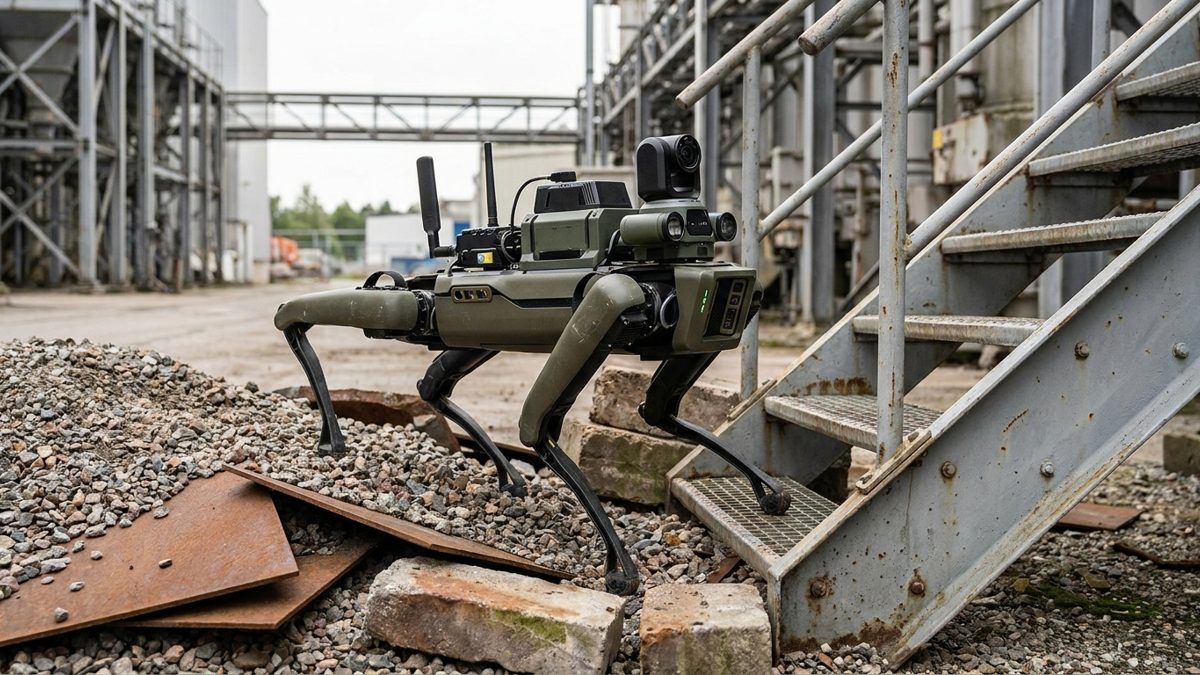 Symbolic image · AI-generated
Four-legged robots are virtually unavoidable on social media – usually in the form of dancing or door-opening "robot dogs". What appears to be a technical gimmick actually has solid industrial applications that are making these devices increasingly valuable.
The decisive advantage of legs over wheels is terrain mobility. Stairs, gravel, cable trays, or tight industrial facilities can be reached with a walking robot where a wheeled platform would fail. This is precisely where four-legged robots excel: in inspection and monitoring in difficult terrain.
Typical applications include regular inspections of industrial facilities, taking measurements at hard-to-reach locations, inspecting construction sites, and security and reconnaissance tasks. Equipped with cameras, thermal imaging, and gas sensors, they deliver data without putting humans in danger zones.
Beyond that, there is the large family of wheel-based mobile robots. Autonomous transport systems move material through warehouses and factories, service robots make deliveries in hospitals and hotels. Here, precise navigation, safe interaction with people, and reliable fleet management are key.
For buyers, battery life, payload capacity, protection class, and above all the software platform are decisive. A mobile robot is only as good as its ability to reliably navigate and integrate into existing workflows. Those who clearly define their use case can find a suitable mobile solution for virtually any task today.
This article was created with the support of artificial intelligence and editorially reviewed. The article image is an AI-generated symbolic image, not a press photo.