Humanoid Robots: Hype, Reality, and Meaningful Applications
Humanoids are in the spotlight – but what can they really do today? A sober assessment between marketing promises and actual benefits.
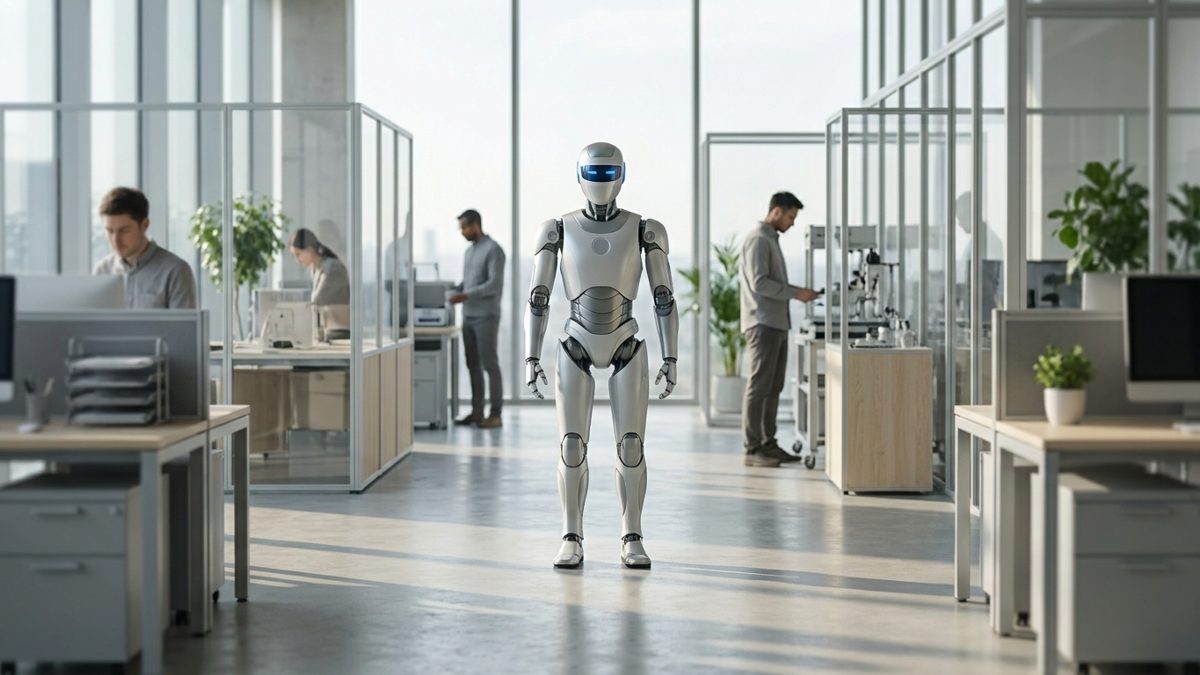 Symbolic image · AI-generated
Few robotics topics generate as much attention as humanoid robots. Images of machines that walk, climb stairs, and hand over objects regularly go viral. Yet there remains a considerable gap between impressive demo videos and productive everyday use.
The appeal of the human form factor is understandable: our environment – doors, stairs, tools – is designed for the human body. A robot in this form could theoretically take on the same tasks without requiring the environment to be rebuilt. This makes humanoids particularly attractive for versatile, variable activities.
In practice, however, humanoid robots are mainly present in research, education, and marketing today. They are excellent for investigating questions of balance, motion planning, and human-robot interaction, or for generating attention at trade shows and in showrooms. Sustained, economically viable factory deployment is still in its early stages.
Anyone acquiring a humanoid should view this realistically: high demands on maintenance and programming, limited battery life, and a maturity level that varies considerably depending on the model. For clearly defined tasks, specialized robotic arms or mobile platforms are often the more efficient choice.
Nevertheless, the development is exciting and progressing rapidly. For research institutions, universities, and technology-oriented companies, humanoid platforms can be a valuable tool – provided expectations are aligned with today's state of the art and not with an advertising video.
This article was created with the support of artificial intelligence and editorially reviewed. The article image is an AI-generated symbolic image, not a press photo.