Robot Categories Explained: Which Type Fits Your Project?
Humanoids, robot arms, mobile platforms, or components – robotics comes in many forms. This overview helps you find the right category for your project.
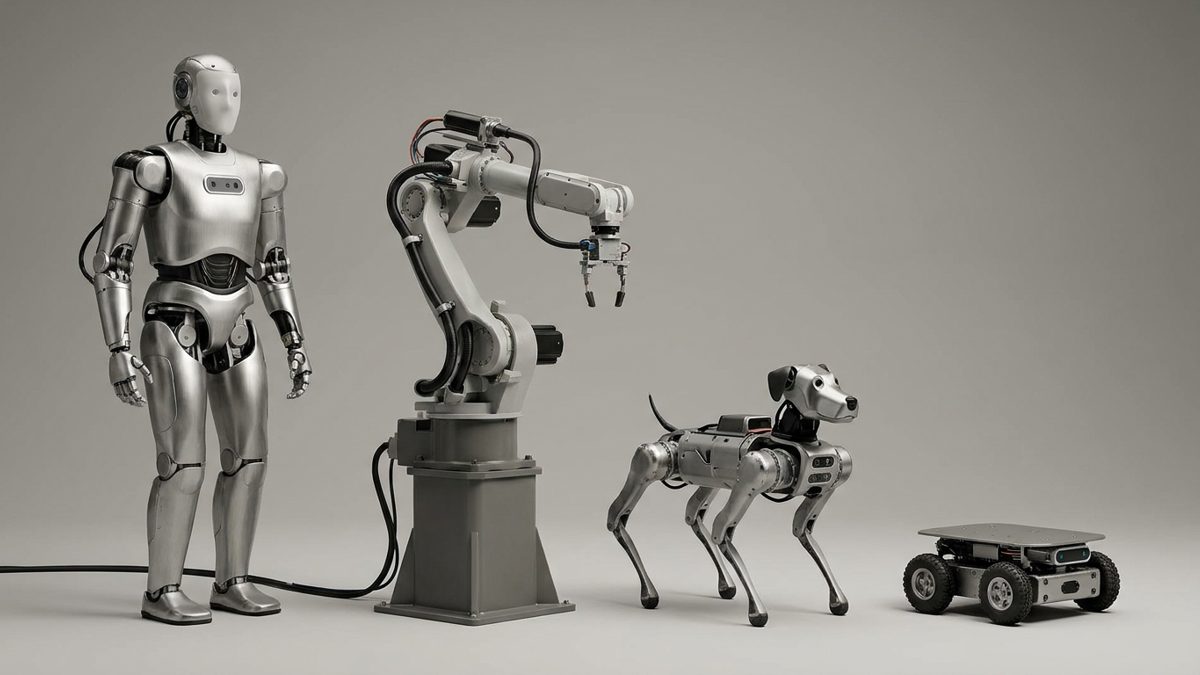 Symbolic image · AI-generated
The world of robotics is remarkably diverse, and «robot» can mean very different things. Anyone looking to buy or sell should know the key categories – because they determine the field of application, price range, and requirements for operation and safety.
Robot arms are the classics of industrial automation. They grasp, weld, assemble, or palletize with high repeatability. Key metrics are payload capacity, reach, and number of axes. Collaborative models, known as cobots, also work safely side by side with humans without the need for a protective cage.
Mobile robots move freely through space – such as autonomous transport platforms in logistics or service robots in hospitals and hotels. Here, navigation, battery life, and sensors matter. A growing subcategory is quadrupedal robots, which master rough terrain and are popular for inspection and research.
Humanoid robots mimic the human form and are primarily at home in research, education, and demonstration. They are complex and demanding, but excel at exploring interaction, locomotion, and manipulation – or wowing an audience.
Finally, there is the large group of components and accessories: grippers, sensors, controllers, motors, and spare parts. They are often the inconspicuous but critical part of a project – and easier to find on a specialized marketplace than in general retail.
This article was created with the support of artificial intelligence and editorially reviewed. The article image is an AI-generated symbolic image, not a press photo.